
How to Choose Your First Boat
A Southwest Florida Owner’s Guide
First-time boat buyer in SWFL? This guide covers boat types, sizing, budgeting, sea trials, financing, and the mistakes to avoid.
Table of Contents
Buying your first boat is one of the best decisions you'll ever make. It's also one of the easiest to get wrong. The team at Fish Tale Boats has helped thousands of first-time buyers across Fort Myers, Naples, and Bonita Springs find the right boat for their life on the water.
Southwest Florida is one of the best boating regions in the country. You've got shallow backcountry flats in Pine Island Sound, deep offshore waters in the Gulf of America, island beaches at Cayo Costa and Keewaydin, and mangrove-lined bays in Estero Bay. No single boat does all of it perfectly, but the right boat does the things you care about really well.
Start With How You'll Use It
The Most Important Question
Before you look at a single boat, answer one question honestly: what are you actually going to do with it? Most first-time buyers walk in with a vague idea and leave with a boat that's a compromise in every direction.
Fishing First
If fishing is the main event, your decision tree narrows fast. Where and how you fish determines shallow draft vs deep-V hull needs.
Family Fun
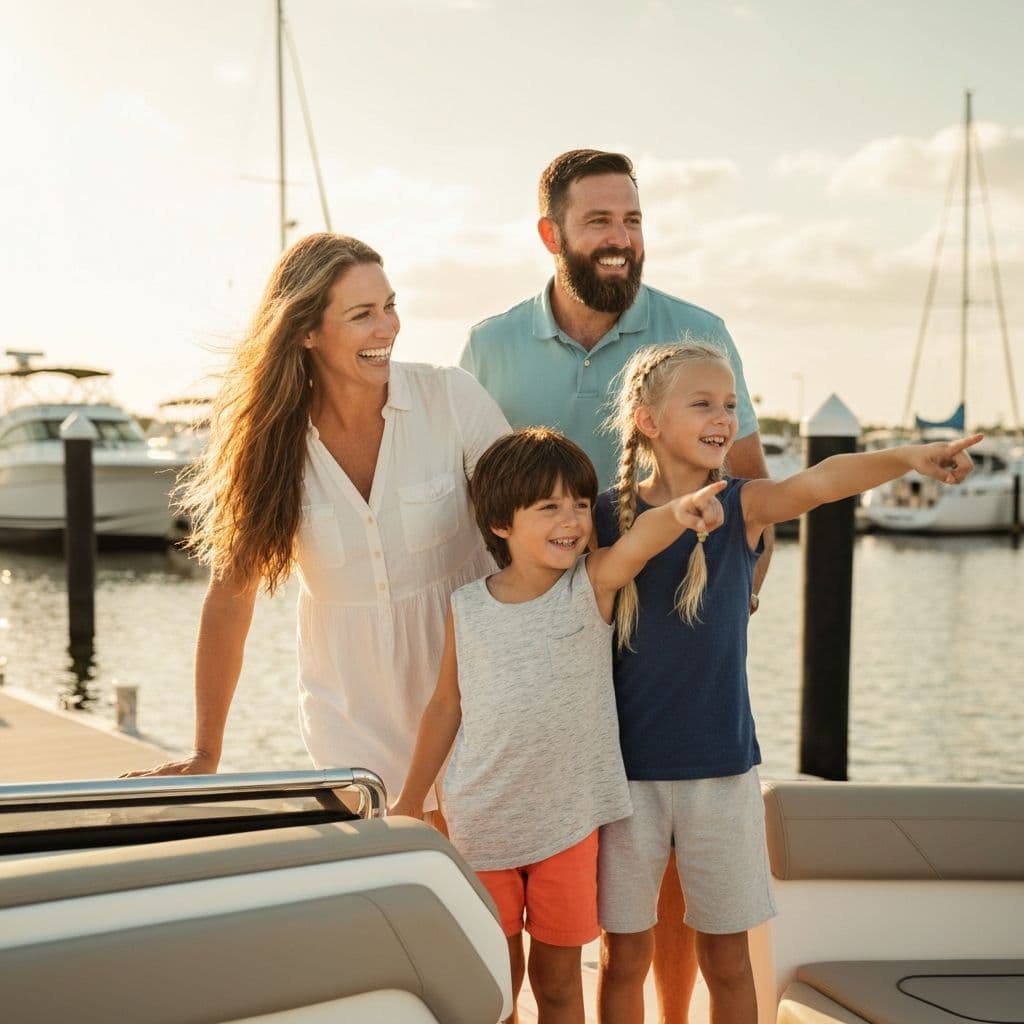
Comfortable seating, shade, a real head, easy boarding from the water, and stability that doesn't white-knuckle your spouse.
Watersports
Tubing, wakeboarding, skiing: you need a boat designed for it. Center console fishing boats aren't fun for pulling tubes.
Cruising & Entertaining
Anchor up, swim, listen to music, watch the sunset. A completely valid reason to buy a boat with specific hull type needs.
Think about how you'll spend 80% of your time on the water. Buy for that. Don't buy for the one offshore trip you might take twice a year.
Boat Types Explained
Understanding Your Options
Here's a plain-English breakdown of the boat types you'll see on Southwest Florida waters, and which Fish Tale brands build each one.
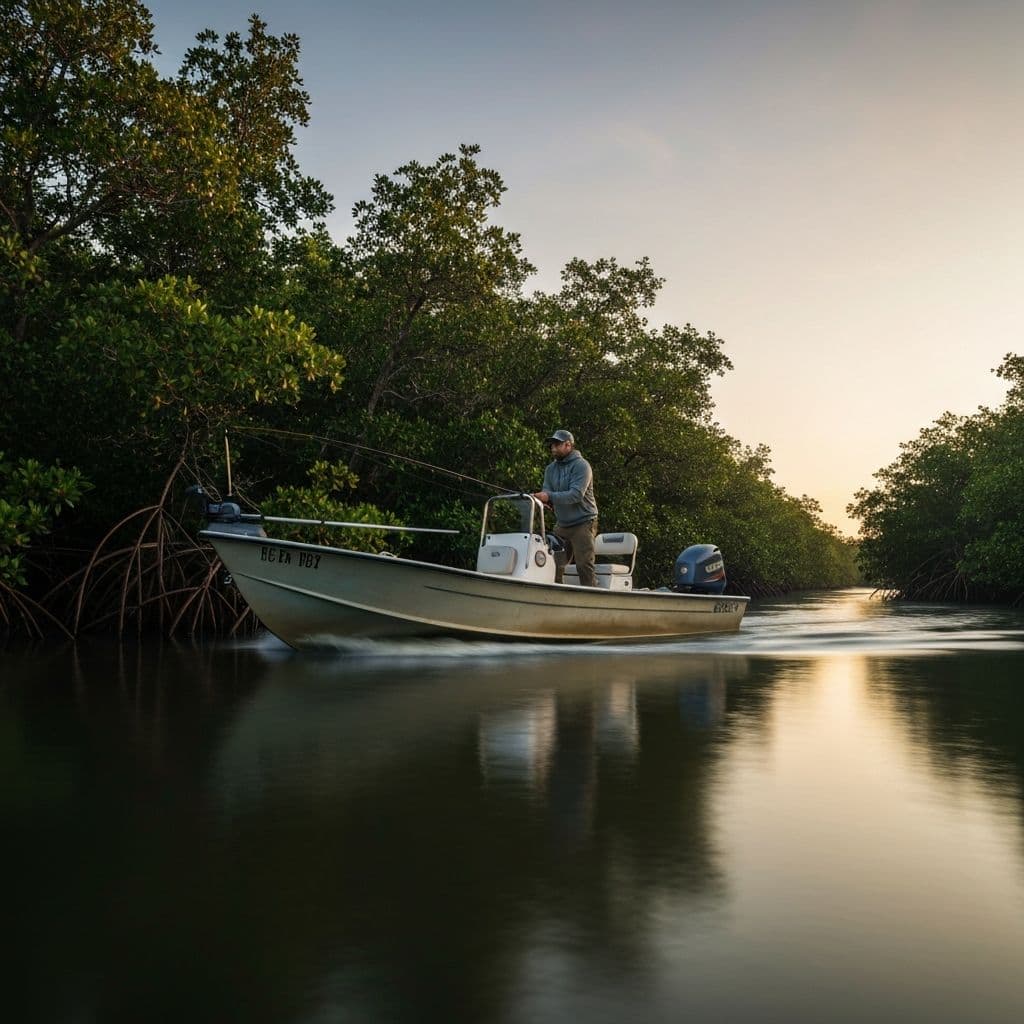
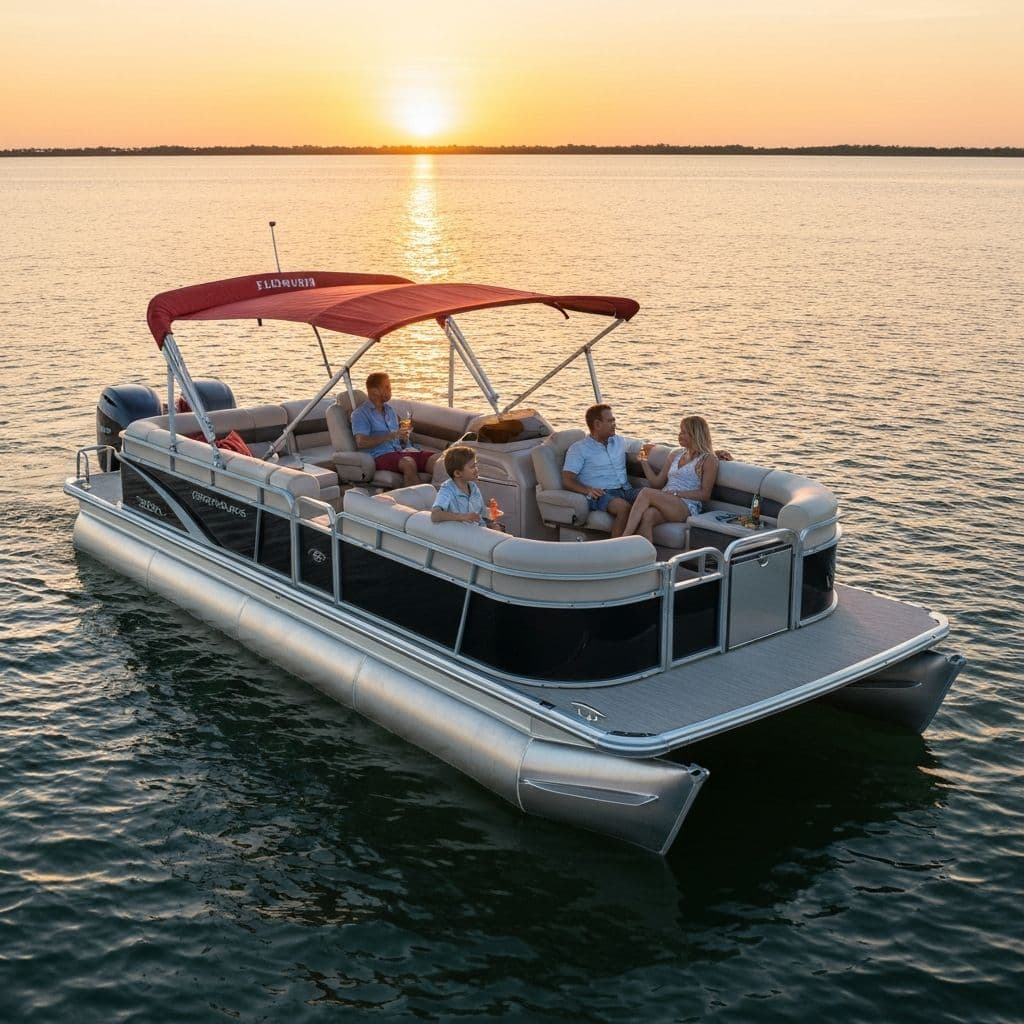
Center Console
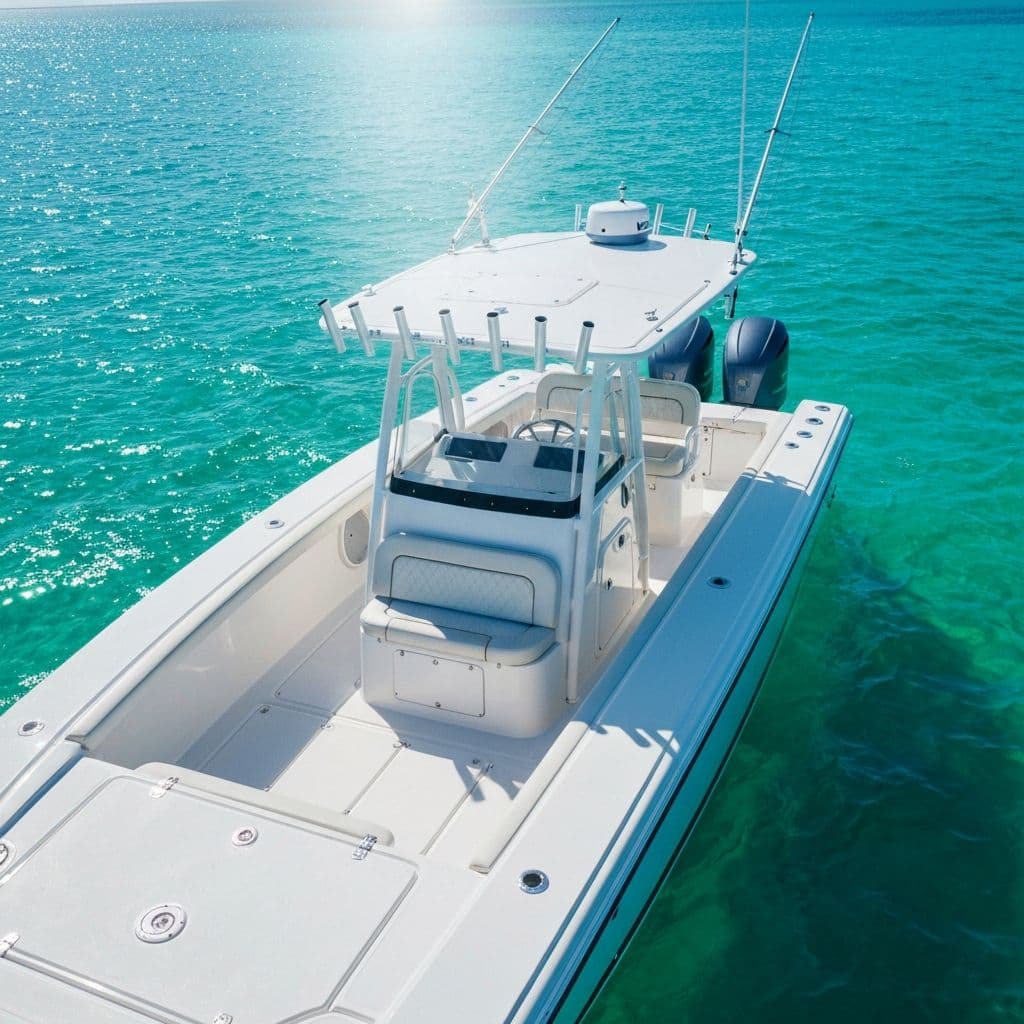
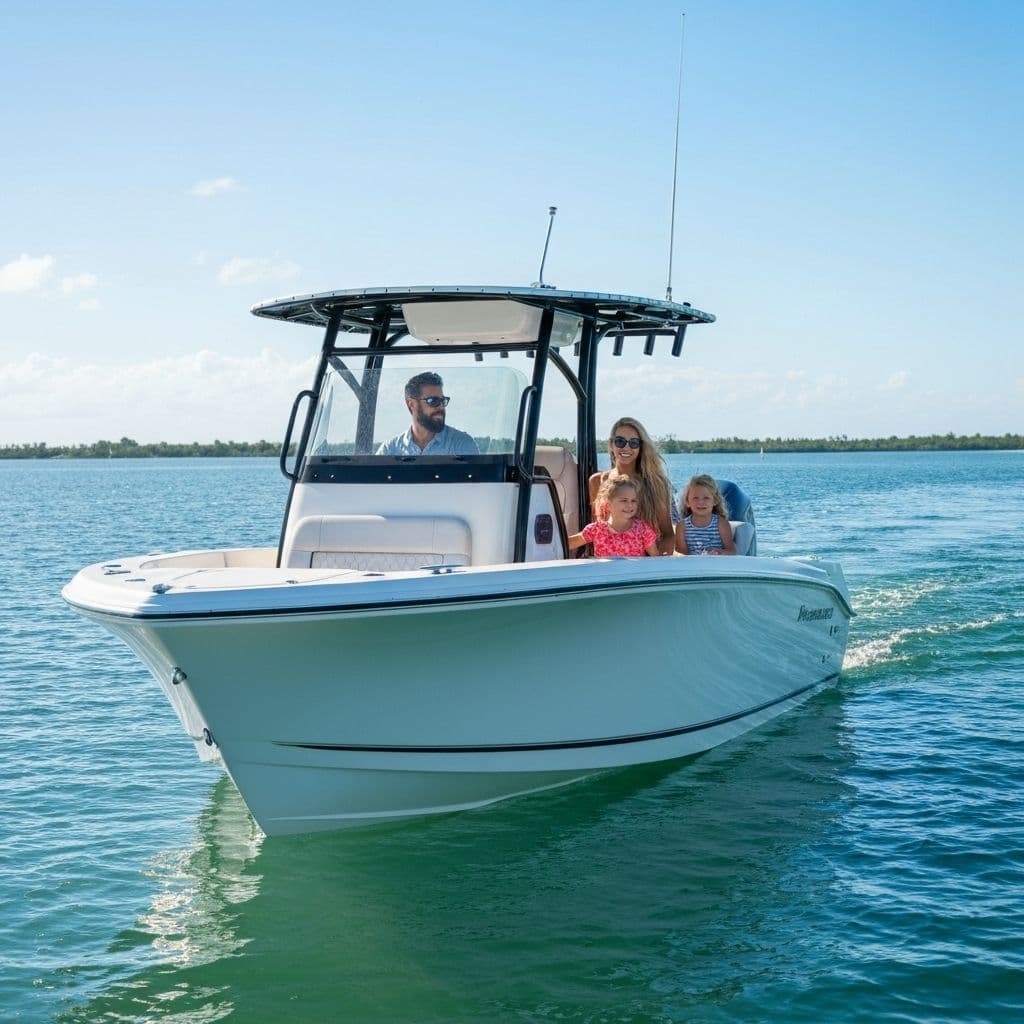
The workhorse of SWFL boating. A single helm station in the center with open deck space wrapping all the way around. Maximum fishability, maximum versatility, minimal comfort features.
Anglers who prioritize fishing performance and deck space. Also works for couples and small groups who don't need creature comforts.
Robalo (20-30+ ft) • Grady-White premium center consoles
Dual Console
Take a center console and add a passenger-side console with a full windshield connecting them. You get a walkthrough bow, wind protection, and a much more comfortable ride for passengers.
Families who want to fish AND cruise comfortably. Couples who spend as much time at the sandbar as they do on the flats.
Grady-White Freedom series • Robalo dual console lineup
Bay Boat
A specialized shallow-water fishing machine. Bay boats draw less water than standard center consoles, have a more stable platform for sight-fishing, and are designed specifically for inshore work.
Dedicated inshore anglers. Redfish, snook, trout, and tarpon in the backcountry of Pine Island Sound, Charlotte Harbor, and the Ten Thousand Islands.
Robalo Cayman series — shallow draft, excellent stability
Pontoon & Tritoon
Flat-deck boats built on aluminum tubes. They offer the most deck space per dollar, the most comfortable ride in calm water, and the most flexible layout for entertaining.
Entertaining, family cruising, sunset tours, and easy fishing in protected waters like the Caloosahatchee, Estero Bay, and the ICW.
Premier Pontoons — luxury fit and finish, superior performance
What Size Do You Need?
Size Matters More Than You Think
Size is the second-most-common thing first-time buyers get wrong (after type). In Southwest Florida, where conditions range from glass-calm bays to three-foot Gulf chop, a boat that's even two feet longer can make a dramatic difference.
Protected water fishing, day trips only
Affordable, easy to trailer, but limited where you can go
Bays, ICW, nearshore, calm Gulf days
Sweet spot for first-time SWFL buyers
Real Gulf capability, offshore runs
Most 'do-everything' SWFL boats live here
Serious offshore, tournaments
Higher costs, requires more experience
Pro tip: Buy the boat that fits your needs for the next five years, not just today. If you can afford a 24-footer, don't buy a 20-footer to save money you'll spend upgrading in two years anyway.
New vs Used
The Honest Breakdown
This is a real decision, and there's no universally right answer. Here's the honest breakdown of both options.
Buying New
- Full factory warranty coverage
- Choose exact options, colors, electronics
- Everything is zero-hours, zero-wear
- Factory-trained service backing
- Depreciation: 15-20% value loss immediately
Buying Used
- Someone else absorbed the depreciation
- Get a larger/better boat for same money
- Fish Tale inspects all used inventory
- Limited or no warranty
- You get what's available, not exact specs
- Potentially outdated electronics
If budget allows, buy new. The warranty alone is worth it for a first-time owner who's still learning what can go wrong on a boat.
Understanding True Cost
The Purchase Price Is Just the Beginning
Here's where first-time buyers get the biggest surprise. We're not saying this to scare you off; boating is worth every dollar. But you need to go in with your eyes open.
| Cost Category | Typical Range | Notes |
|---|---|---|
| Insurance | $1,500 - $4,000/year | Hurricane coverage is a factor in SWFL |
| Fuel | $2,000 - $5,000/year | Based on 20-25 weekends of boating |
| Maintenance | $1,000 - $3,000/year | Oil, service, zincs, bottom paint |
| Storage | $0 - $1,500/month | Trailer at home vs marina wet slip |
| Registration & Taxes | Varies | 6% FL sales tax plus county surtax |
The 10-15% Rule
Budget 10-15% of your boat's value annually for total operating costs. If you buy a $100,000 boat, expect to spend $10,000-$15,000 per year on insurance, fuel, maintenance, storage, and incidentals.
The Sea Trial
Never Buy a Boat You Haven't Driven
A sea trial isn't a joyride. It's your chance to evaluate the boat under real conditions before you commit. At Fish Tale, we offer sea trials by appointment at all three SWFL locations.
What to Test
- Ride at cruising speed in various conditions
- Handling at slow speed and idle
- Acceleration and hole shot
- Visibility from the helm
- Noise and vibration levels
- Seating comfort and layout
Questions to Ask
- Real-world fuel economy at cruise?
- What does warranty cover?
- What engine package for my use?
- Recommended maintenance schedule?
- How does it handle rough water?
Thirty minutes on the water saved him from a $90,000 mistake. That's what a sea trial is for.
Mistakes to Avoid
Learn From Others' Mistakes
After working with thousands of boat buyers over nearly three decades, we've seen every mistake in the book. Here are the ones that come up most often.
Buying Too Small
First-time buyers often go conservative on size. Two feet longer can make a dramatic difference in ride quality and confidence in SWFL conditions.
Ignoring Total Cost of Ownership
The purchase price is 60-70% of your first-year cost. Budget for insurance, storage, fuel, and maintenance.
Skipping the Sea Trial
Never buy a boat you haven't driven on the water. Period. Schedule a sea trial at Fish Tale before committing.
Not Considering Storage
Figure out where the boat will live before you buy it. Marina waitlists in SWFL can stretch months long.
Buying for the Exception
Don't buy for the one offshore trip twice a year. Buy for the thing you're going to do most weekends.
Not Bringing Your Partner
If someone else will spend time on the boat, they need to be part of the decision from the start.
Frequently Asked Questions
First-Time Buyer FAQ
What is the best type of boat for a beginner in SWFL?
For most first-time SWFL buyers, a 22-24 foot center console or dual console is the best starting point. It handles the bays, nearshore waters, and island trips comfortably while leaving room to grow into offshore fishing.
How much does a first boat typically cost?
A new boat in the most popular first-buyer range (22-26 feet) typically runs $60,000 to $150,000 depending on brand, type, and engine package. Used boats in good condition start around $30,000 to $50,000. Remember to budget 10-15% of the boat's value annually for operating costs.
Do I need a boating license in Florida?
Florida requires a Boating Safety Education ID Card for operators born on or after January 1, 1988. You can get it by completing an approved course through the Florida Fish and Wildlife Conservation Commission.
Should I buy new or used for my first boat?
Both are good options. New boats offer full warranty, current features, and the ability to customize. Used boats offer better value and potentially a larger boat for the same budget. If budget allows, new boats with warranty are ideal for first-time owners still learning what can go wrong.
What size boat do I need to go offshore?
For safe and comfortable offshore fishing out of Southwest Florida, we recommend a minimum of 24 feet with twin outboards and a deep-V hull. Many experienced offshore anglers run 26-30 foot center consoles.
Can I trailer my boat or do I need a marina slip?
Boats under 24 feet are generally easy to trailer with a mid-size truck or SUV. Boats over 24 feet usually require a heavy-duty truck. If you don't want to deal with trailering, dry storage and wet slips are available at marinas throughout SWFL.
Download the First Boat Buyer's Guide
Get our complete guide to choosing your first boat with comparison charts, cost calculators, and a sea trial checklist.
- Boat type comparison chart
- True cost calculator worksheet
- Sea trial checklist
Download Your Free PDF
Enter your details and we'll send the guide straight to your inbox.
Ready to Schedule Service?
Our 14,000-square-foot factory-authorized service center in Fort Myers is ready to help. Yamaha Pro Elite Plus dealer with 15+ certified technicians.
Fort Myers
15581 S Tamiami Trail
Naples
2540 Davis Blvd
Bonita Bay Marina
27598 Marina Pointe Dr