
What Actually Makes a Boat “Saltwater-Ready”
Saltwater fishing boats for sale in Southwest Florida need to survive the water they're sold into — a real Gulf chop, a summer squall that builds fast, and 12 months a year of salt on every fitting. That's a different question than which hull shape to buy. It's a build-quality question, and it's the one this page answers.
Walk the docks in Fort Myers, Naples, or Bonita Springs long enough and you'll see it: boats three years old that still look and run new, sitting next to boats the same age with chalky gelcoat, seized hardware, and an outboard that's already been rebuilt once. The difference usually isn't how the owner used the boat. It's what the boat was built with in the first place.
A boat "floats in saltwater" the moment it launches. Being built for saltwater is a different standard — one that shows up in the hull, the hardware, and the systems long before you ever clear Boca Grande Pass or San Carlos Bay.
Hull Design and Deadrise for Gulf Sea State
Deadrise — the angle of the hull's V measured at the transom — determines how a boat handles chop once you're past the flats and into open Gulf water. A flatter hull rides softer at idle but pounds when the wind builds; a steeper deadrise cuts through waves but needs more speed to stay efficient in calm water.
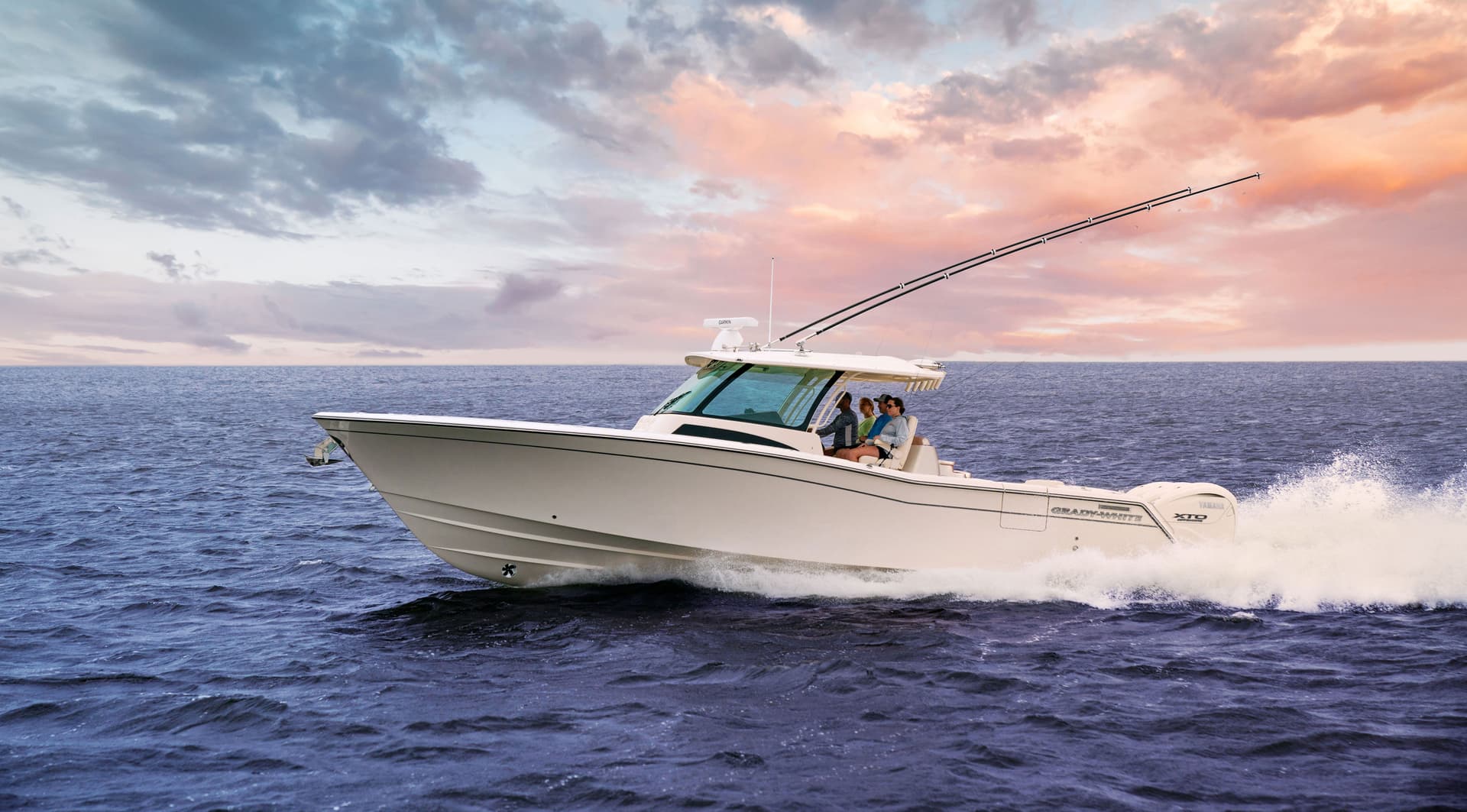
The Grady-White Canyon 271 carries a 20-degree deadrise SeaV² hull, and the larger Canyon 326 and Canyon 336 hold that same 20-degree design at 32 feet 6 inches and 33 feet 6 inches respectively — both rated Yacht Certified, Grady-White's most rigorous inspection standard. The Robalo R250 and R270 run a steeper 23-degree deadrise, built specifically for open-water authority rather than flats work. Neither number is "better" in the abstract — it's about what a boat is asked to do on a given afternoon when a storm starts stacking up offshore of Sanibel.
Construction and Corrosion Resistance
Saltwater attacks anything that isn't built to resist it — carbon steel hardware, unsealed wiring runs, standard gelcoat that chalks under UV and salt spray. The boats on this page use marine-grade stainless hardware, vacuum-infused fiberglass construction (Grady-White's Canyon line is built this way in Greenville, North Carolina), and sealed electrical systems as standard, not upgrades. That construction standard is the actual dividing line between a boat that's saltwater-capable and one that merely gets wet.
Deadrise, by design
Deadrise varies by design intent, not just size — the Grady-White Canyon 271 runs a 20-degree SeaV² hull, the Robalo R250 a steeper 23 degrees, both purpose-built for Gulf offshore work.
Rigged for salt
Every boat on this page rides on Yamaha outboards, and Fish Tale Boats is a Yamaha Pro Elite Plus dealer with factory-trained technicians at our 14,000-sq-ft Fort Myers service center.
Offshore Center Consoles in Stock
8+ available now at Fish Tale Boats
Robalo
2027 Robalo ROBALO 15 WAHOO
Fort Myers
Call for Price
Robalo
2027 Robalo ROBALO 15 WAHOO
Fort Myers
Call for Price
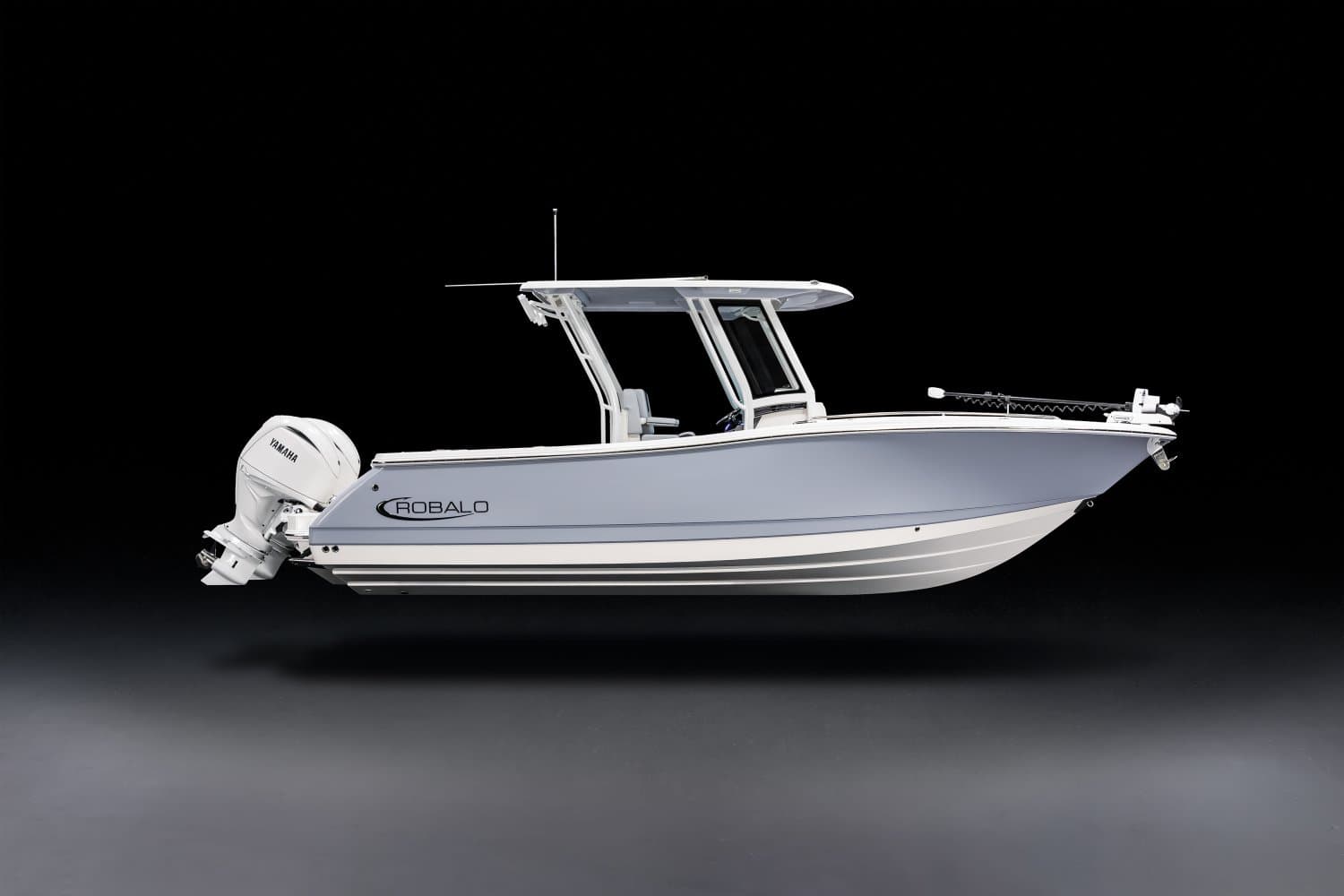
Robalo
2027 Robalo R270
Fort Myers
Call for Price
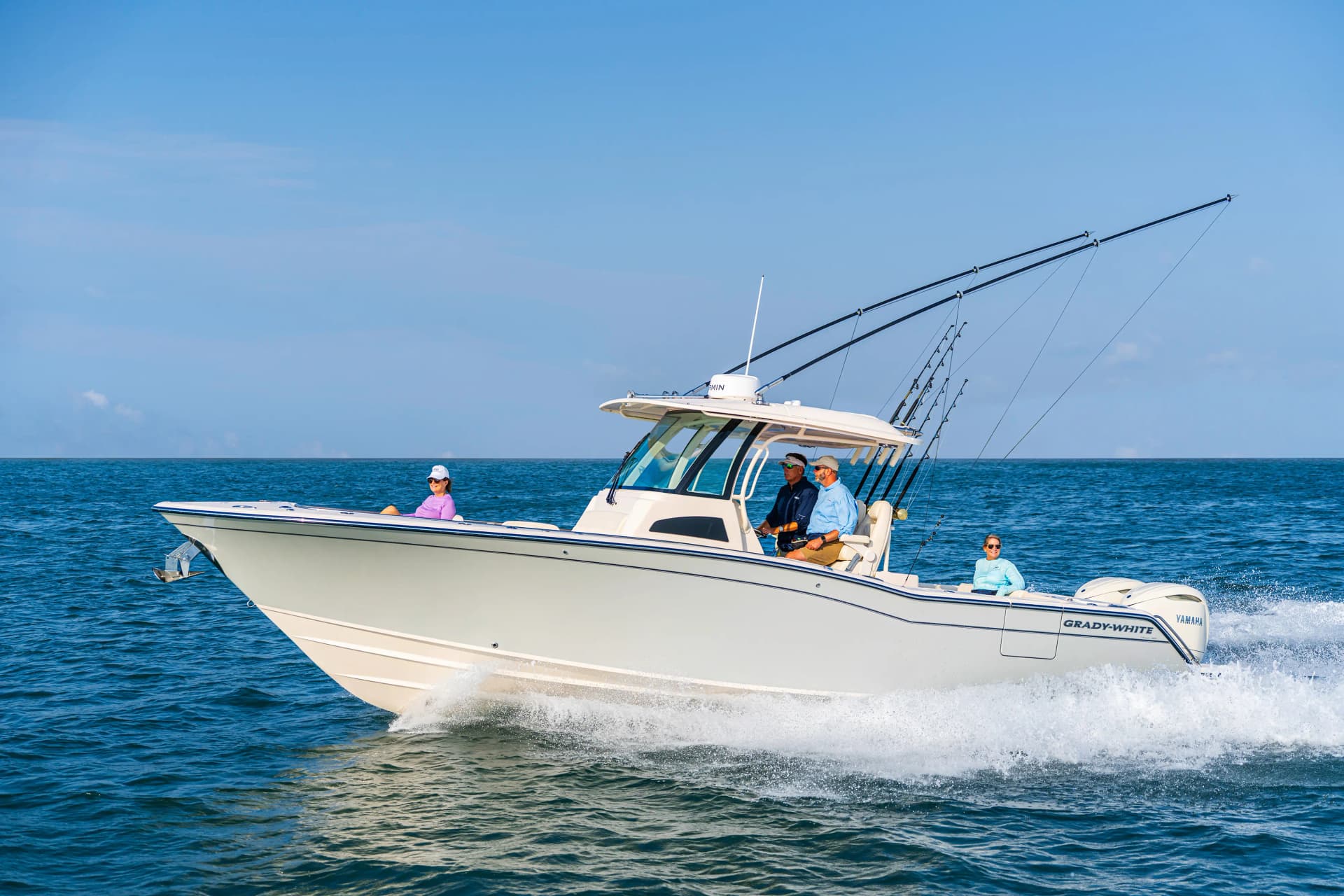
Grady-White
2027 Grady-White Canyon 326
Fort Myers
Call for Price
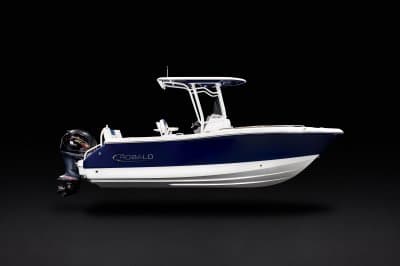
Robalo
2027 Robalo R232EX
Fort Myers
Call for Price
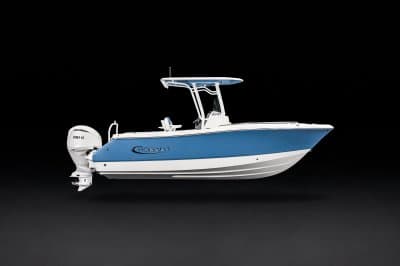
Robalo
2027 Robalo R230
Fort Myers
Call for Price
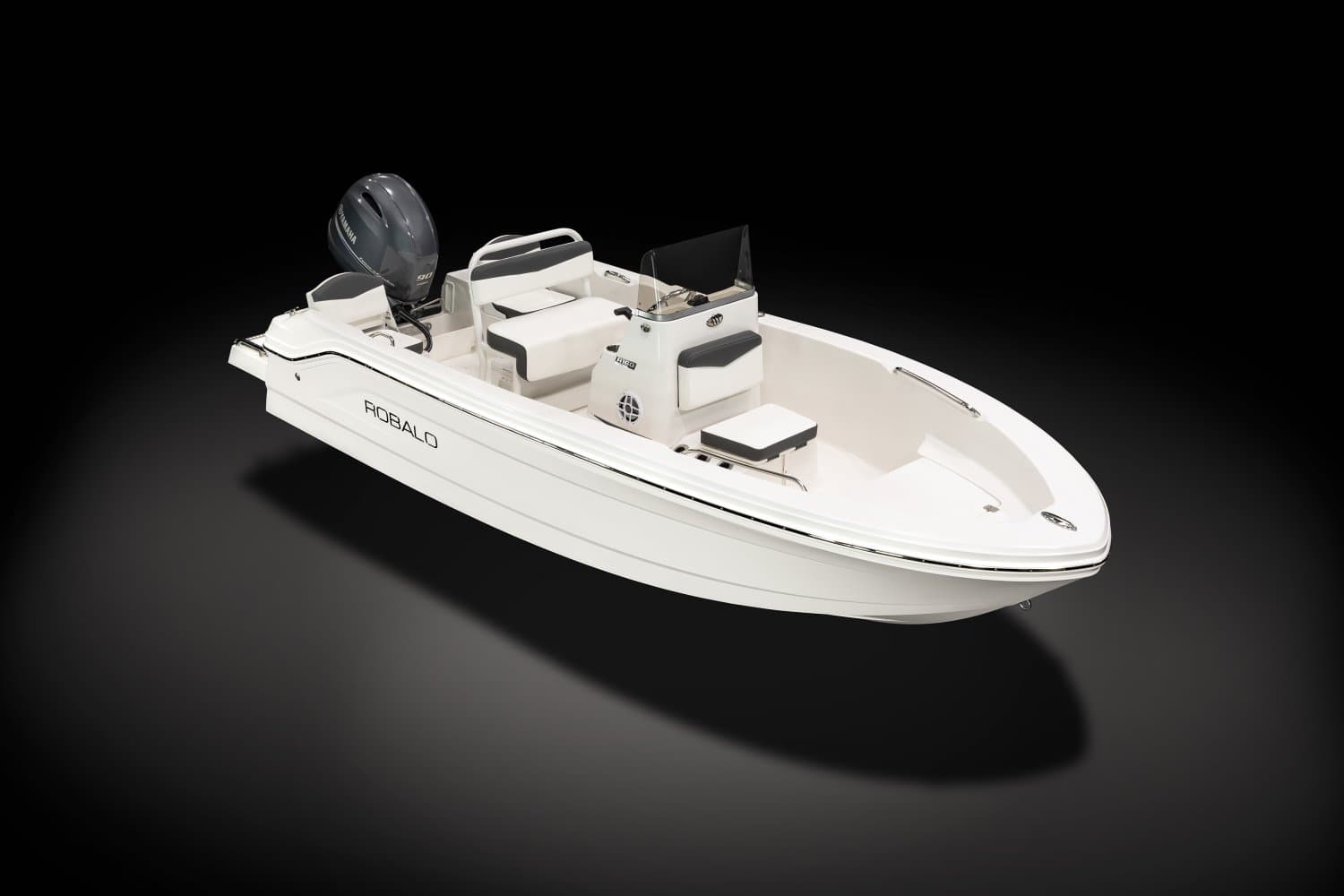
Robalo
2027 Robalo R160
Fort Myers
Call for Price
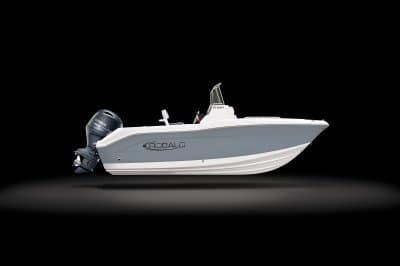
Robalo
2027 Robalo R180
Fort Myers
Call for Price
Coastal Explorers in Stock
3 available now at Fish Tale Boats
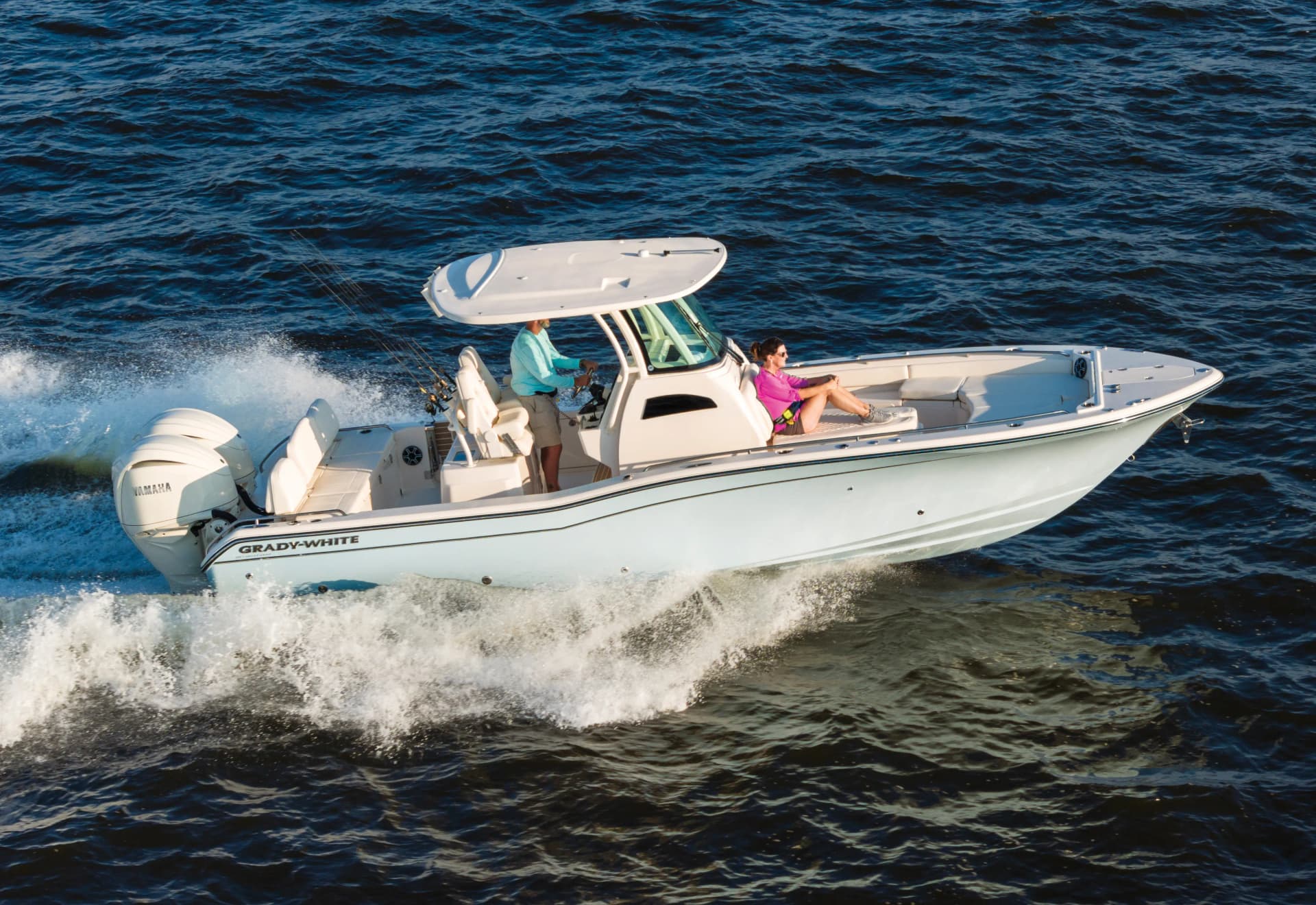
Grady-White
2027 Grady-White 281 CE (Coastal Explorer)
Fort Myers
Call for Price
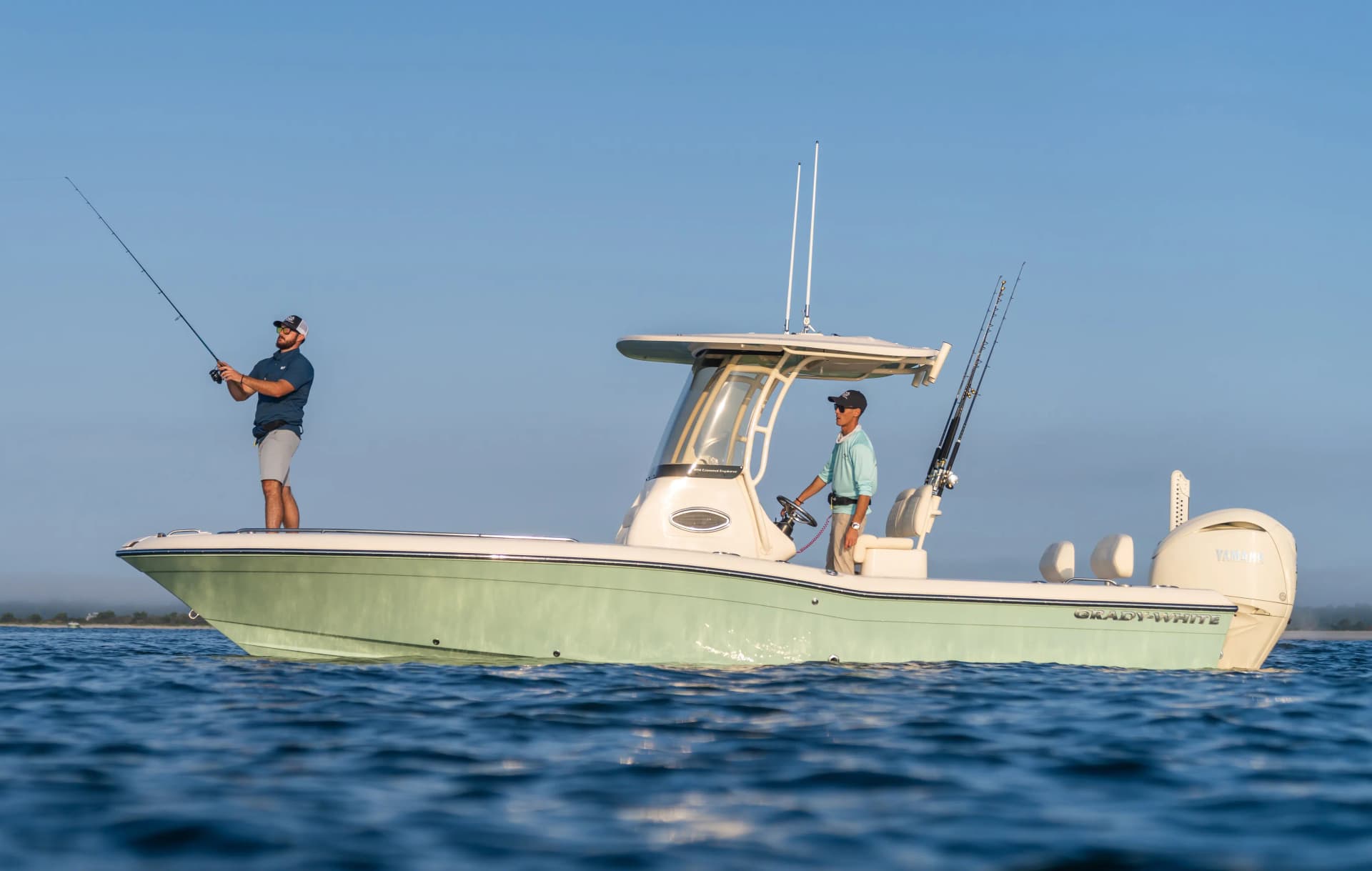
Grady-White
2027 Grady-White 251 CE (Coastal Explorer)
Fort Myers
Call for Price
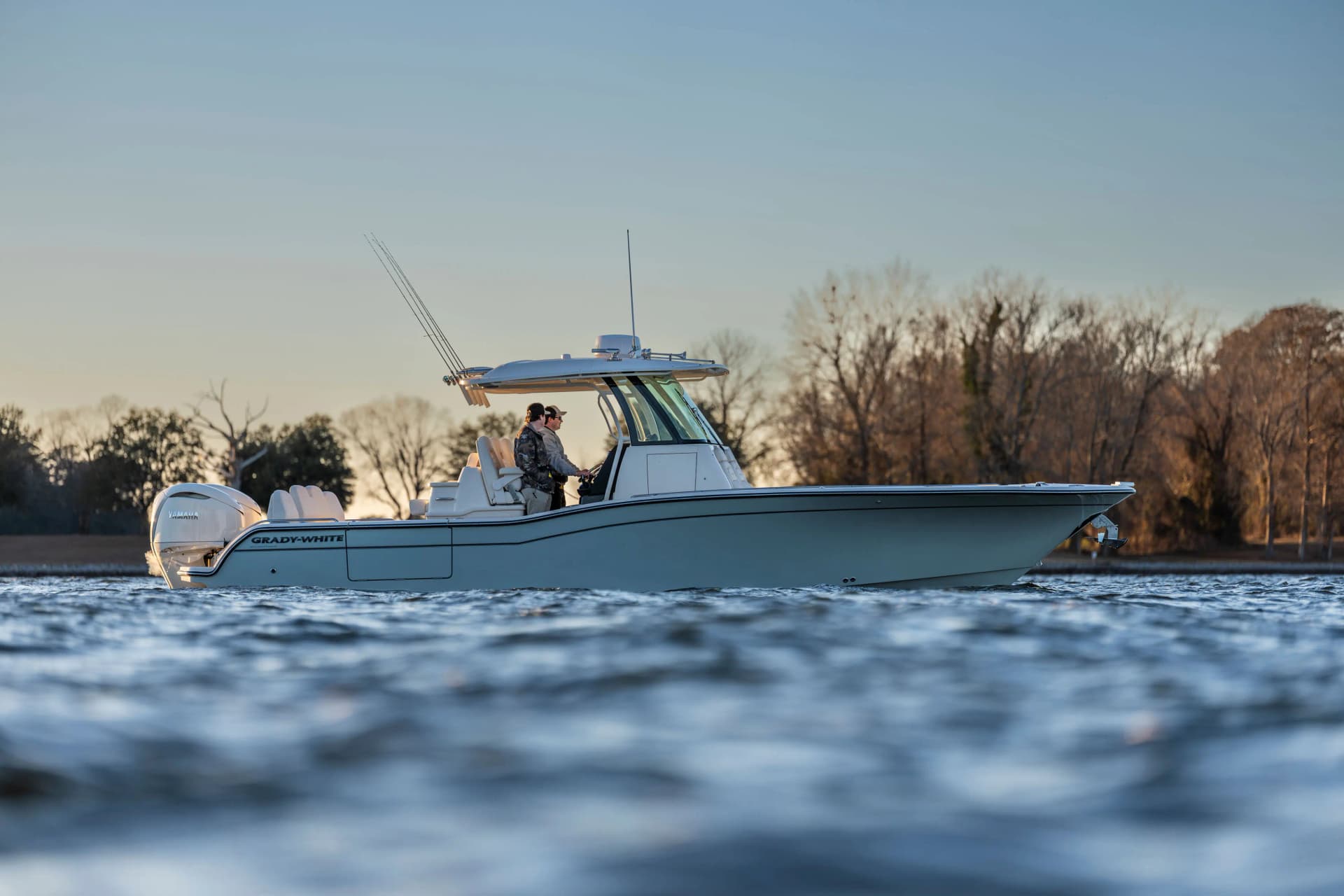
Grady-White
2027 Grady-White 321 Coastal Explorer
Fort Myers
Call for Price
Express Cabins in Stock
1 available now at Fish Tale Boats
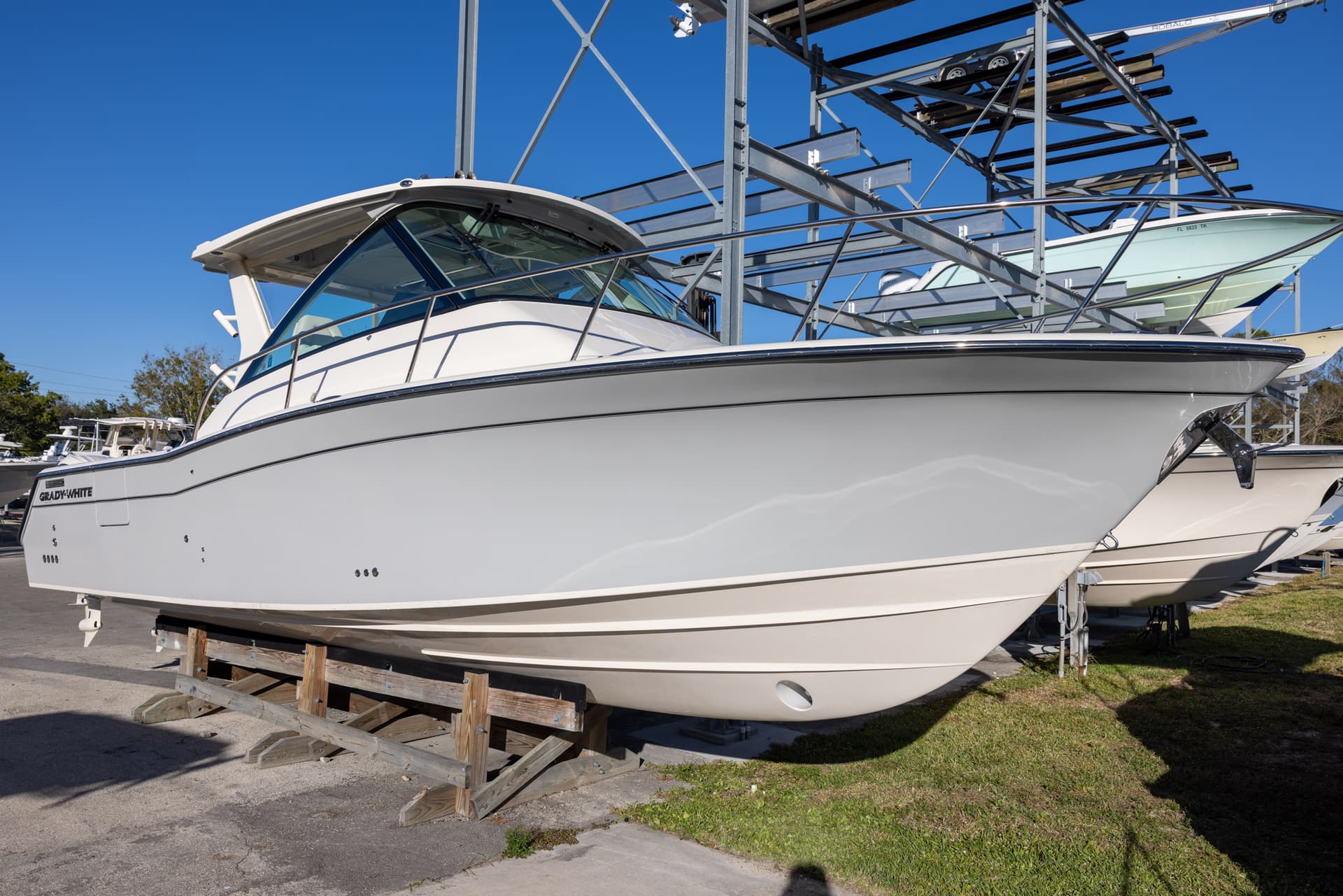
The Fish Tale Boats Lines Built for This
Whether you're a year-round Fort Myers local running the ledges every weekend or a snowbird down from November through April wanting a boat that's ready the day you land, browse our current new boat inventory or used listings, get a free trade valuation toward an upgrade, or call (239) 463-4448 to talk through which model actually fits how you fish.
Fuel Capacity and Honest Range Math for SWFL Offshore Runs
Fuel capacity swings from 165 gallons (Robalo R250) to 361 gallons (Grady-White Canyon 336) — your realistic offshore range depends on which boat you're actually buying, not a category average.
Honest math: a bigger tank doesn't just mean farther, it means margin — the reserve to outrun weather building over the Gulf on a July afternoon, or the fuel to fish a full day at the ledges and still idle home against a headwind. Buy for the runs you'll actually make, not the ones you'll take twice a year.
The Real Cost
What Saltwater Actually Costs You
Saltwater capability costs something ongoing: freshwater rinses, sacrificial anodes, and scheduled service intervals are not optional on a boat that lives in salt.
Every Trip
This is the part that gets skipped in most sales conversations, and it shouldn't be. A boat kept in saltwater — whether on a lift in Estero Bay or wet-slipped in Fort Myers — needs a freshwater rinse after every trip, sacrificial zinc anodes checked and replaced on a schedule, and more frequent service intervals than a freshwater boat ever sees. Salt finds every gap in a fitting, a wire loom, or a fastener that wasn't rated for it, and it works slowly enough that owners who skip maintenance don't notice until the bill arrives.
Hurricane Season
Hurricane season, June through November, adds another layer: haul-out decisions, storage planning, and — for boats that stay in the water — more frequent bottom and running-gear checks. None of this is a reason to avoid a saltwater-capable boat. It's a reason to buy the level of service relationship that goes with one, and to budget for it the same way you budget for fuel.
Payment Calculator
Estimated Monthly Payment
$0.00
/month
Loan Summary
* This calculator provides estimates for informational purposes only. Actual rates, terms, and payments may vary based on creditworthiness, loan amount, and lender requirements. Contact our financing team for a personalized quote.
Saltwater Fishing Boats Buyer's Guide
Yamaha Outboard Rigging and Why Factory-Authorized Service Matters Here
Yamaha Outboard Rigging and Why Factory-Authorized Service Matters Here
Every offshore-capable boat in the Fish Tale Boats lineup is rigged with Yamaha four-stroke power — the Canyon 271 with twin 300s, the Canyon 306 and Canyon 326 with twin 350s, the Canyon 336 with triple 350s, and the Robalo R-series running Yamaha's F150 through F350 range depending on model. Saltwater is hard on outboards specifically: internal corrosion, fouled cooling passages, and electrical connectors that fail quietly until they fail completely.
That's why rigging alone isn't the whole answer — who services the engine matters just as much. Fish Tale Boats is a Yamaha Pro Elite Plus dealer, and our Fort Myers HQ runs a 14,000-square-foot service center with factory-trained Yamaha technicians who see saltwater-related outboard issues every day, not occasionally.
Livewells, Fishboxes, Washdown, and Shade
Livewells, Fishboxes, Washdown, and Shade
The fishing systems on an offshore boat need to survive the same salt exposure as the hull. The Robalo R360 carries twin 100-gallon fish boxes and a cabin for multi-day trips, and the Canyon 336 backs its 11-foot, 7-inch beam and tournament-grade deck space with a 38-gallon freshwater supply — the largest of the Canyon models covered on this page. The Express 340's AV2 hardtop with SureShade electric retractable shade matters more in Southwest Florida than almost anywhere else in the country; a full day on the Gulf without shade is a different kind of trip. Raw-water washdown at the transom keeps fish blood and bait scent from soaking into the deck before you're back at the dock.
Electronics for Blue Water
Electronics for Blue Water
Running to the ledges or the Gulf Stream means trusting your electronics further from help than a bay-boat trip ever requires. Chartplotter and sonar packages on these boats scale with the mission — from a single Garmin helm display on entry models to twin large-format units and factory-installed VHF on the Canyon and R-series flagships.
Saltwater Fishing Boats FAQ
Still deciding? Call (239) 463-4448 and talk it through with a sales advisor — no pressure, we're boaters too.
What actually makes a boat “saltwater-capable” instead of just able to float in saltwater?
It comes down to construction, not category: marine-grade stainless hardware, sealed electrical systems, vacuum-infused fiberglass, and a hull deadrise matched to open-water conditions. The Grady-White Canyon and Robalo R-series lines are built to that standard as a baseline, not an upgrade package.
How do you keep a boat from corroding in Florida saltwater?
Rinse the boat and engine with fresh water after every trip, check and replace sacrificial zinc anodes on a regular schedule, and keep up with factory-recommended service intervals — saltwater corrosion is slow and quiet until a fitting or connector fails. A boat kept on a lift still needs this; being out of the water full-time doesn't eliminate salt exposure from spray and humidity.
How far offshore can I realistically run from Fort Myers in a boat like the Canyon 306 or Robalo R270?
It depends on the boat's fuel capacity and your comfort margin, not just top speed. The Canyon 306 carries 290 gallons and the R270 carries 180 gallons — both give you real range to the Gulf Stream or Dry Tortugas with reserve to spare, but the honest answer always starts with the tank size of the specific model, not a category average.
Do I need to rinse my boat after every saltwater trip, even a short one?
Yes. Salt residue builds up regardless of trip length, and it's the buildup over many short trips — not one long one — that causes most corrosion problems on hardware, canvas snaps, and electrical connectors.
What's the difference between an inshore boat and a true offshore saltwater fishing boat?
Inshore boats are built for shallow draft and protected water — bays, sounds, and backcountry. Offshore-capable boats add fuel range, a steeper deadrise for open-water chop, and heavier-duty construction to handle Gulf sea state. Our fishing boats guide breaks down which hull type fits which kind of fishing.
Is a bigger offshore boat always the right choice for Southwest Florida fishing?
No — and we'll tell you that directly. If most of your fishing happens in Pine Island Sound, Charlotte Harbor, or the flats around Cayo Costa, a smaller, shallower-draft boat will serve you better and cost less to run and maintain than a 30-plus-foot offshore center console.