What a Center Console Boat Actually Is
Center console boats for sale at Fish Tale Boats span two brands — Robalo and Grady-White — running from a compact, trailerable model built for a single angler and a ramp all the way up to a 45-foot offshore flagship, and they're the boat most Southwest Florida anglers reach for first. A center console puts the helm in the middle of the deck, opens up 360-degree walk-around access, and gives you the range to fish a nearshore reef in the morning and push offshore in the afternoon if the water lays down.
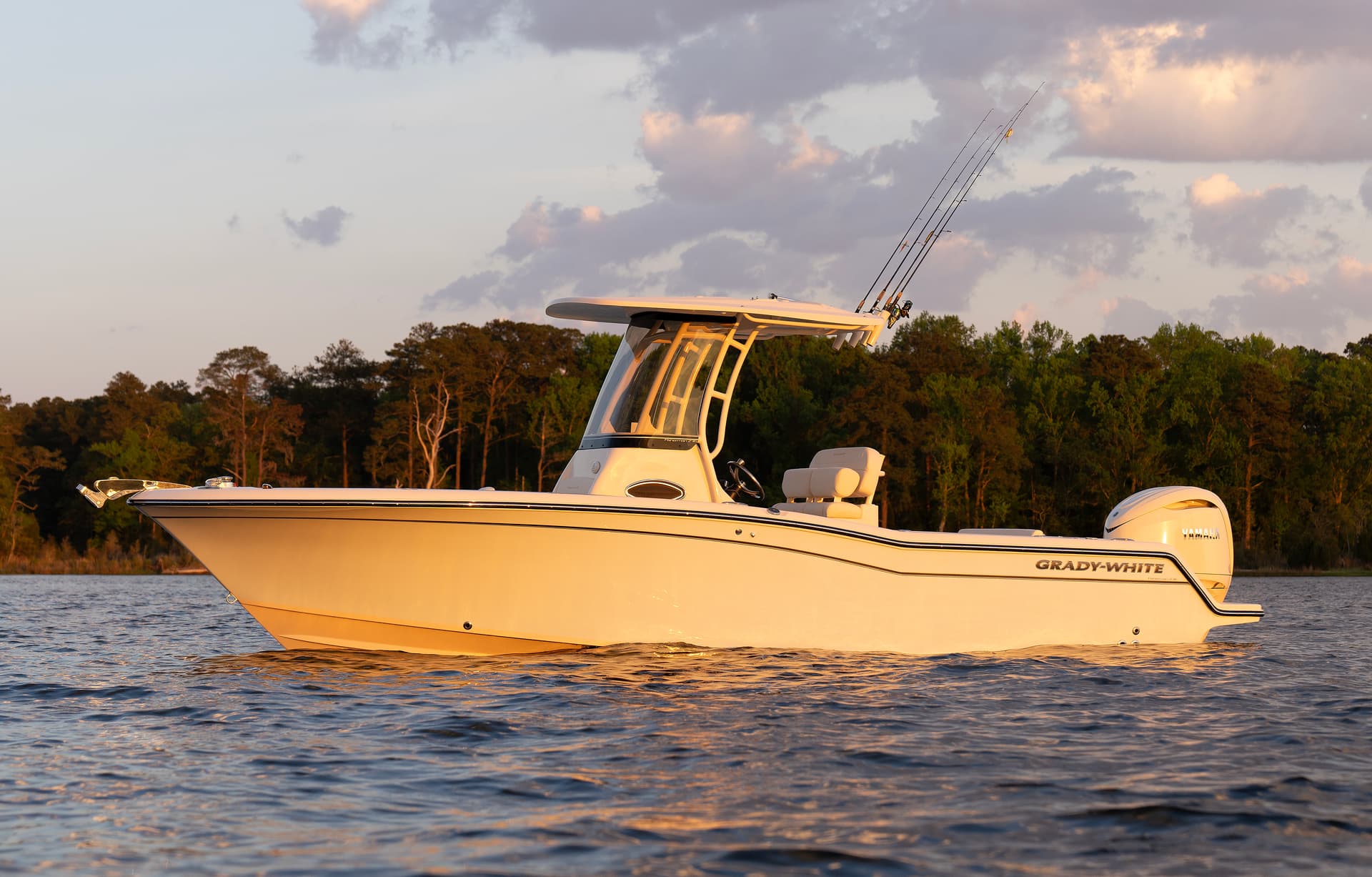
A center console is built around one idea: put the helm in the middle of the boat so anglers can work the entire deck, bow to transom, without anything in the way. There's no cabin blocking the front deck, no side consoles narrowing the walkways — just open rails and a 360-degree path around the boat. That layout is why serious anglers keep choosing it generation after generation. When a fish is running under the boat, you can follow it around the console instead of fighting a rod through a windshield.
Below the console you'll typically find a head, rod storage, and rigging space. Forward, most models add casting decks or bow seating that converts between fishing mode and family mode in minutes. It's a genuinely dual-purpose boat, which is part of why it dominates the Gulf Coast dealer lots — though if you're still weighing hull types, our fishing boats guide compares every option side by side.
That's not a coincidence of design — it's what the Gulf Coast demands. Running a pass in a chop, working a bait well from any angle, and covering real distance to open water are daily realities here, not occasional ones.
Fish Tale Boats is the eight-time #1 Robalo Dealer Worldwide, 2019 through 2026. Every Robalo model is available for a sea trial out of Fort Myers, Naples, or Bonita Springs before you commit.
Two brands, one lot
Fish Tale Boats carries center consoles from two brands: Robalo (R160 through R360, plus the Explorer CC line) and Grady-White (the Canyon series and the Fisherman series).
Compact to flagship
The category spans the compact, trailerable Robalo R160 built for a single angler and a ramp, up to Yacht Certified Canyon models and the R360 — the largest Robalo ever built, with a 350-gallon fuel tank and twin 100-gallon fish boxes for multi-day offshore runs.
Know the tradeoff
A center console trades shade and cabin comfort for fishability — know that tradeoff before you buy, not after your first August afternoon on the water.
Browse every center console in stock, both brands, one list.
View All Center ConsolesNew Robalo Center Consoles in Stock
6+ available now at Fish Tale Boats
Robalo
2027 Robalo ROBALO 15 WAHOO
Fort Myers
Call for Price
Robalo
2027 Robalo ROBALO 15 WAHOO
Fort Myers
Call for Price
Robalo
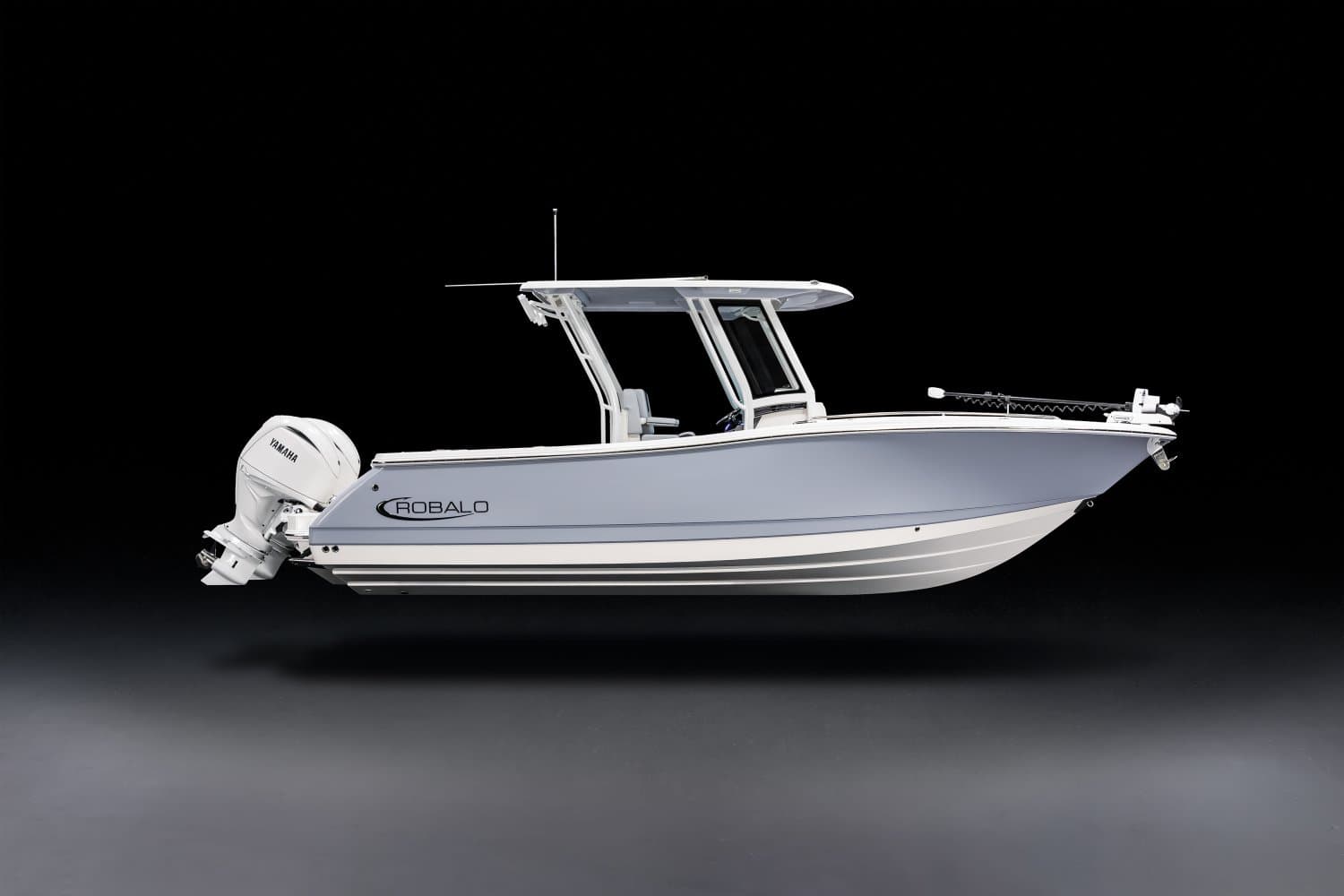
2027 Robalo R270
Fort Myers
Call for Price
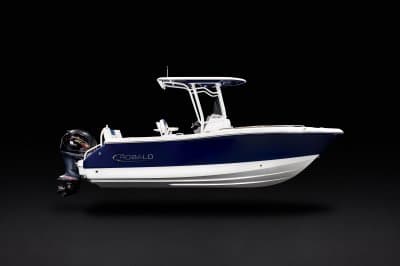
Robalo
2027 Robalo R232EX
Fort Myers
Call for Price
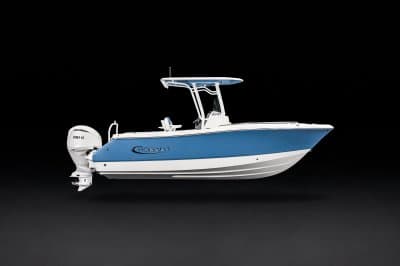
Robalo
2027 Robalo R230
Fort Myers
Call for Price
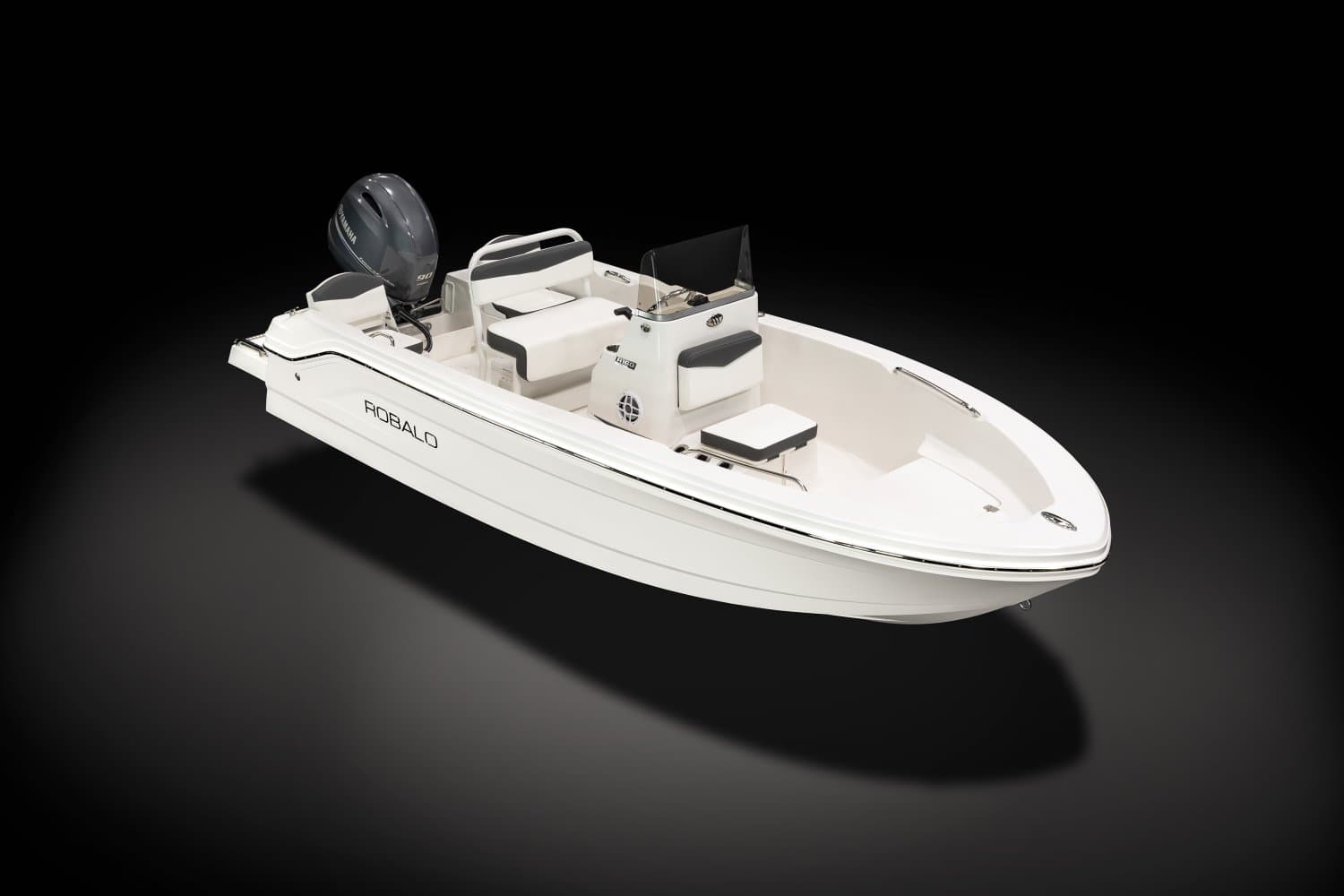
Robalo
2027 Robalo R160
Fort Myers
Call for Price
New Grady-White Canyon & Fisherman Center Consoles in Stock
6+ available now at Fish Tale Boats
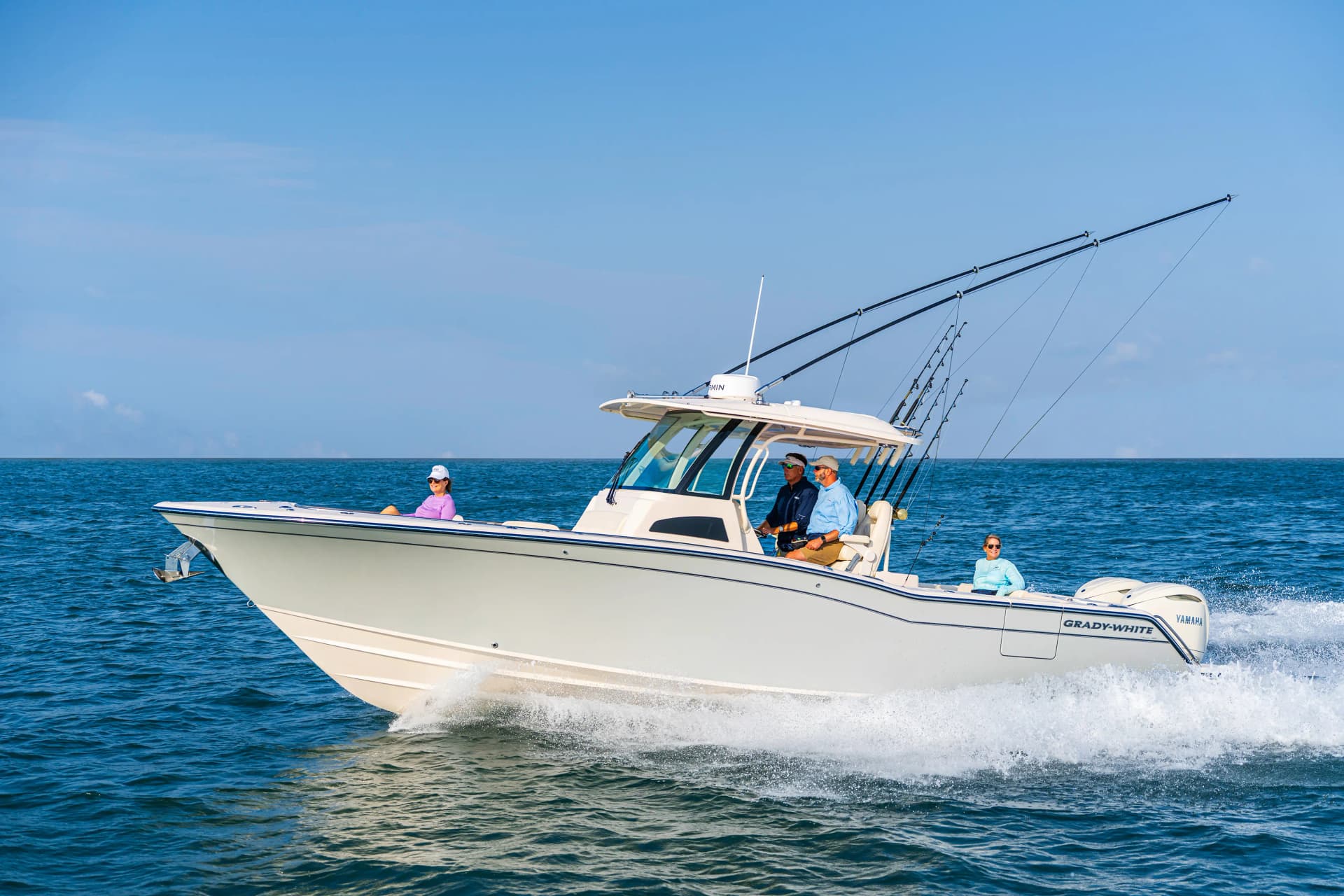
Grady-White
2027 Grady-White Canyon 326
Fort Myers
Call for Price
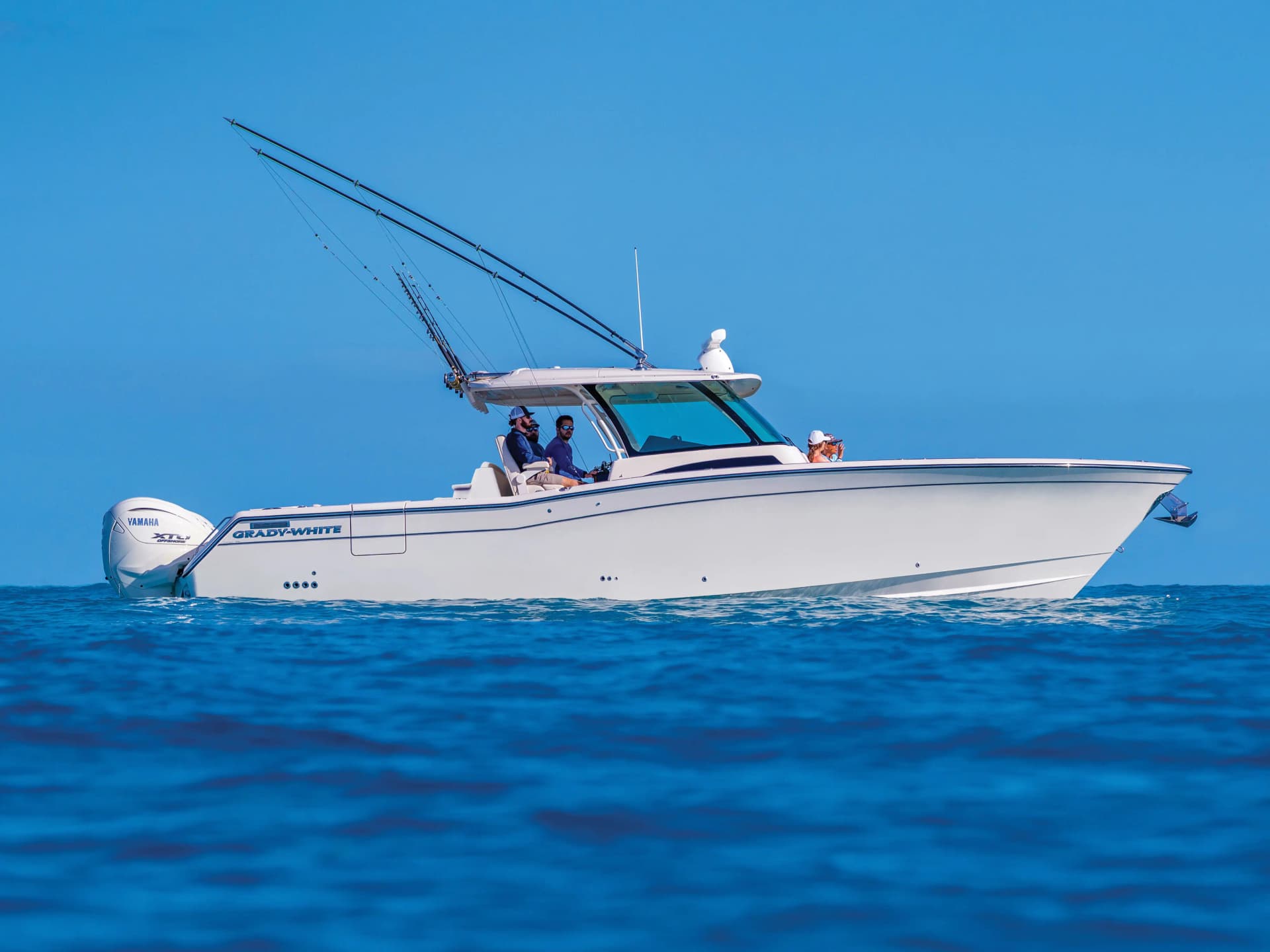
Grady-White
2027 Grady-White Canyon 386
Fort Myers
Call for Price
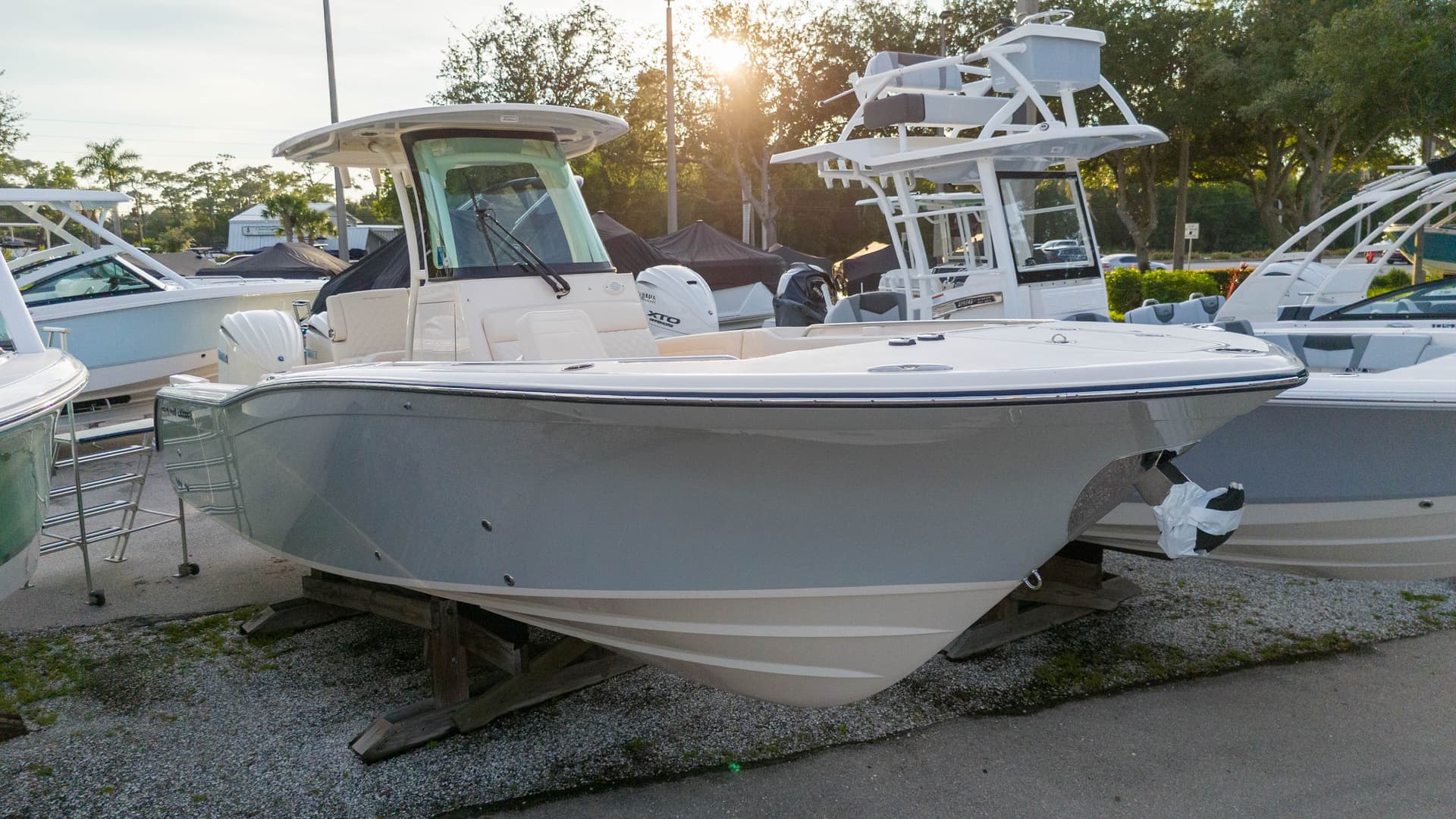
Grady-White
2027 Grady-White 266 Canyon
Fort Myers
Call for Price
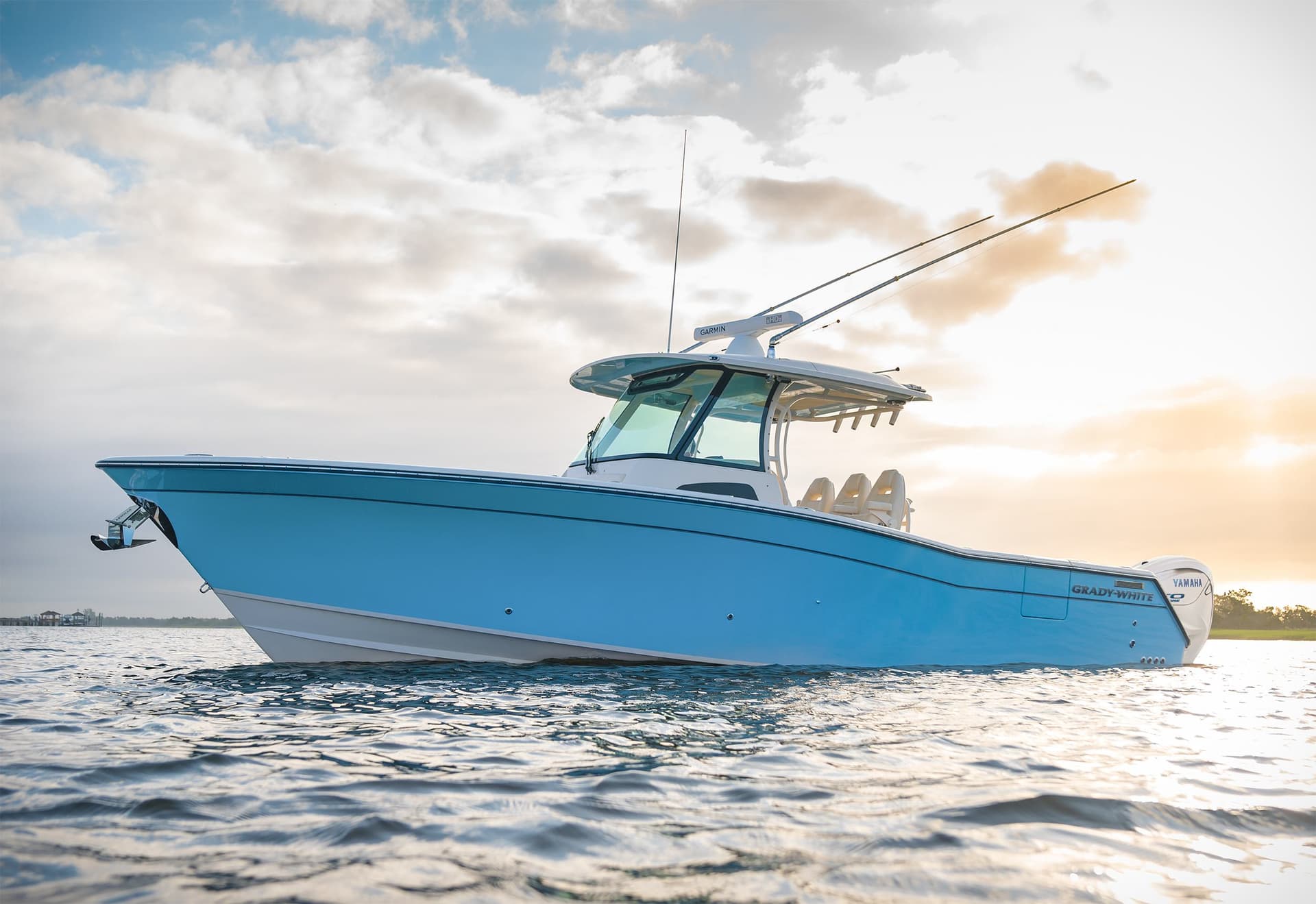
Grady-White
2027 Grady-White Canyon 336
Fort Myers
Call for Price
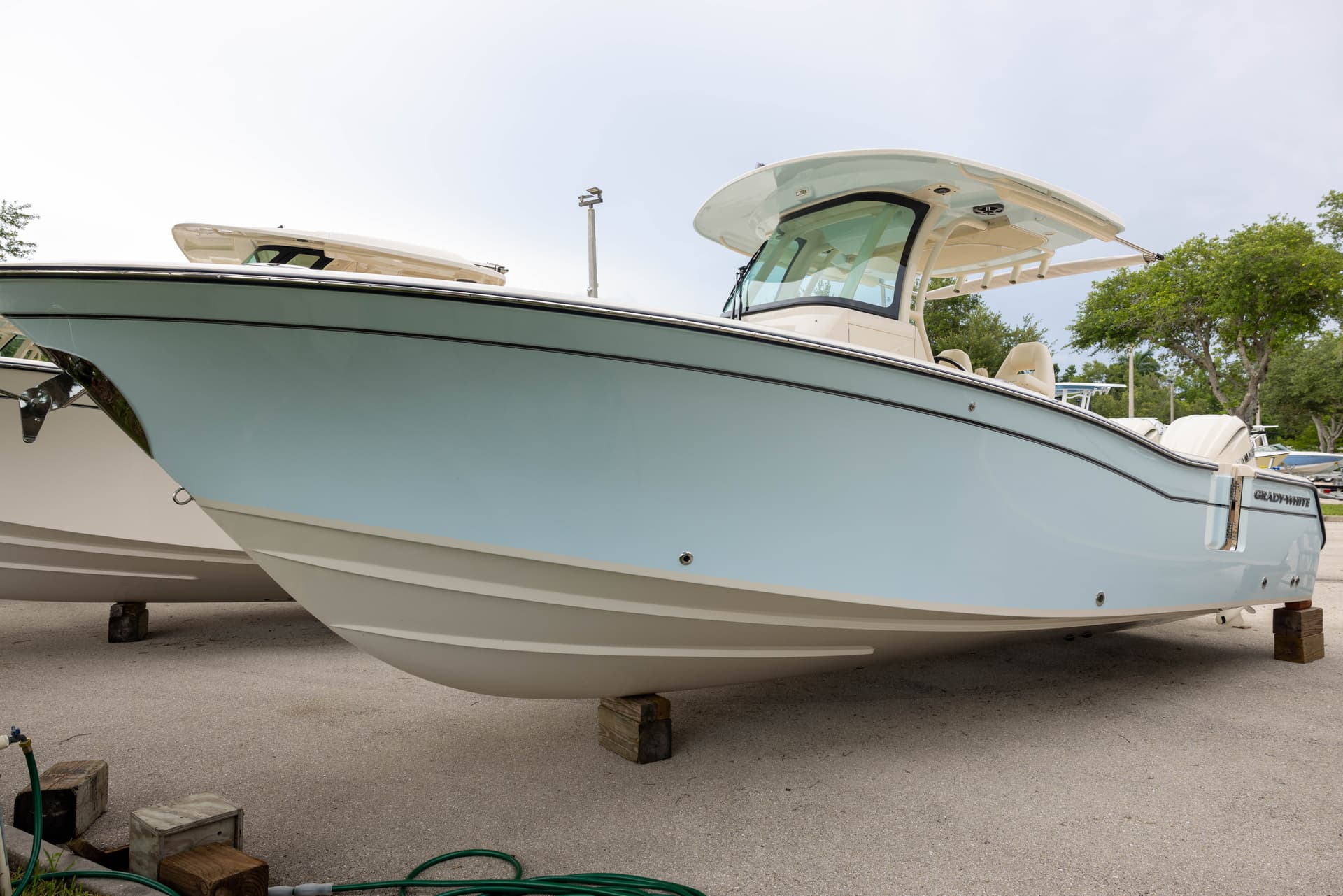
Grady-White
2026 Grady-White Canyon 271
Fort Myers
Call for Price
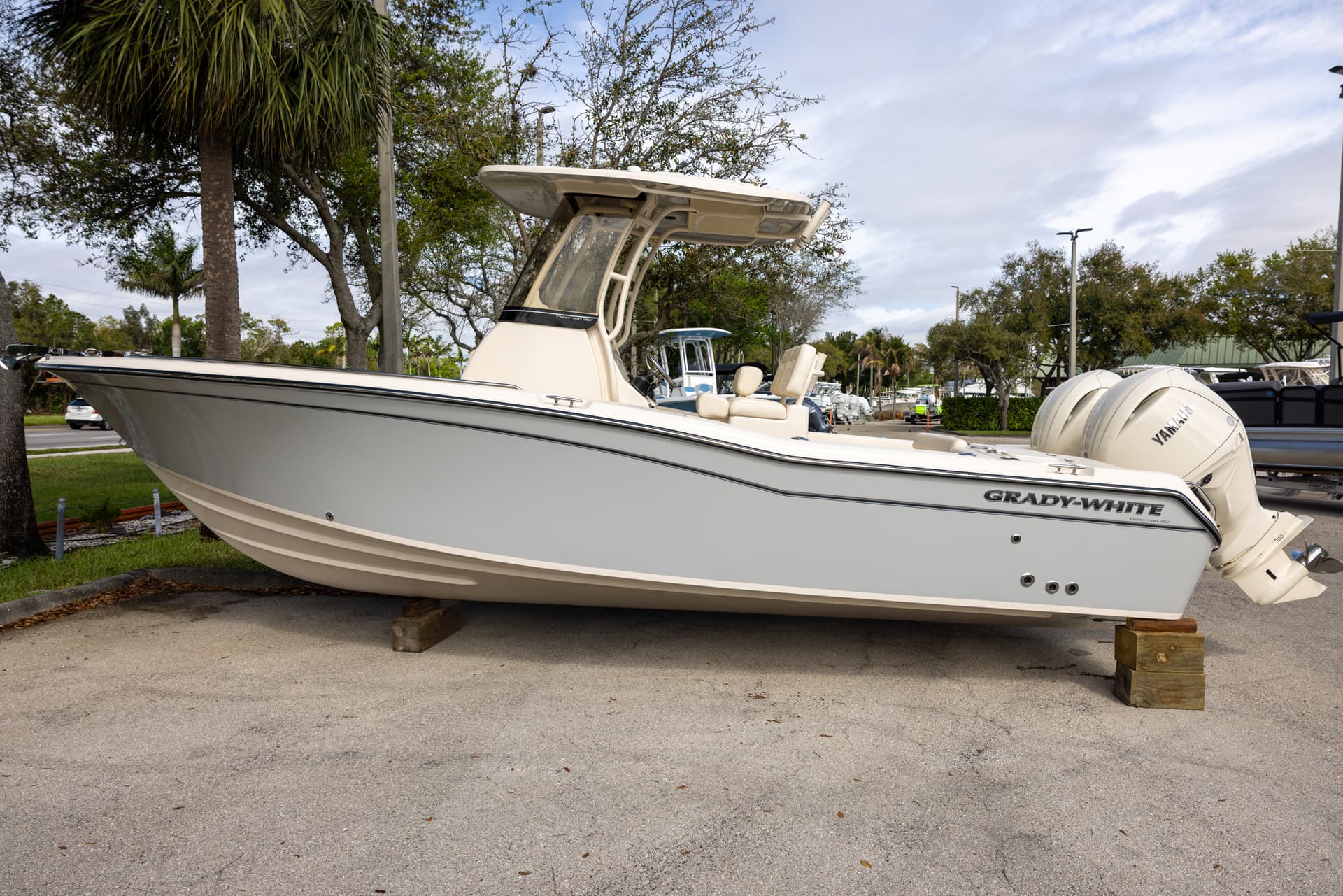
Grady-White
2026 Grady-White Fisherman 257
Fort Myers
Call for Price
Robalo vs. Grady-White Canyon
Robalo Center Consoles
Browse the Robalo center console lineup →
Robalo also builds the Explorer CC series — the R202EX, R222EX, and R232EX — which take the same center console hull and add extended console layouts built for longer runs with more gear and more guests aboard.
Grady-White Canyon & Fisherman
The practical difference: a Robalo buy generally gets you more boat and more standard features per dollar, with Fish Tale's deepest service bench behind it. A Grady-White Canyon buy gets you SeaV2 hull engineering, Yacht Certification on the larger models, and a resale reputation that's hard to match in the category. Neither is the “better” boat outright — they're built for different budgets and different expectations of finish.
Sizing a Center Console: Compact, Mid-Size, Offshore
Compact
Robalo R160 & R200
Inshore-nearshore
The Robalo R160 and R200 live here — trailerable, easy to launch solo at a ramp in Bonita Springs or Fort Myers, and right-sized for skinny water in Pine Island Sound or the backcountry near Ten Thousand Islands. The R200 draws just 15 inches and carries a 70-gallon fuel tank, enough range to cross Charlotte Harbor without a second thought.
22–28 Feet
Robalo R270 & Canyon 271
The workhorse range
This is the workhorse range for SWFL — the Robalo R270 and the Grady-White Canyon 271 both sit here, with the fuel capacity and hull deadrise to handle real Gulf chop while still being manageable for a family crew. Most buyers who fish and cruise in roughly equal measure land in this bracket.
Offshore
Canyon 306–336 & Robalo R360
Built for the run
The Canyon 306 through 336 and the Robalo R360 belong here — bigger fuel tanks, higher max horsepower ratings, and in Grady-White's case, Yacht Certification on the larger models. These are the boats built for the 40-mile run to a Gulf wreck and a full day on station, not a quick sandbar trip.
There's no universally “right” size — it's a function of how far offshore you actually run, how many people you carry, and where you'll trailer or dock it.
Center Console vs. Dual Console
A center console maximizes fishable deck space with open walk-around access; a dual console splits that space into two forward seating areas with a windshield, trading some fishability for more contained, family-friendly seating and storage. We've written a full breakdown of the tradeoffs — sea state handling, passenger comfort, and which owners tend to be happiest with each — in our Center Console vs. Dual Console guide. If fishing is the primary use and passengers are secondary, a center console is almost always the right call.
Local Water
Why Center Consoles Own the SWFL Water
Southwest Florida boating isn't one kind of water — it's several kinds in the same afternoon. You might idle out of Fort Myers through the Caloosahatchee, cross San Carlos Bay, and be running open Gulf swells past Sanibel within the hour. A center console is built for exactly that transition.
Pass Running.
Boca Grande Pass, the cuts around Cayo Costa, and the inlets near Estero Bay all get a short, steep chop when tide runs against wind. A center console's forward console and open bow let a driver see and react to that chop from a stable, centered position — something a boat with a windshield-mounted helm off to one side handles less predictably.
Offshore Range.
SWFL anglers routinely run 20 to 40 miles into the Gulf for grouper and snapper, or farther during snapper season openers. Fuel capacity matters more than almost anything else in that math — a Grady-White Canyon 306 carries 290 gallons, enough to make the run to the Middle Grounds and back with a real margin, while a Robalo R270 carries 180 gallons for shorter but still legitimate offshore days. See our saltwater fishing boats guide for the full rundown on the hull construction and rigging built for that kind of Gulf duty.
Weather That Turns Fast.
Summer afternoon storms build over the Gulf with little warning May through September. A center console's speed and open sightlines help you see weather coming and get back to Pine Island Sound or Charlotte Harbor before it arrives — cabin boats built for comfort trade away some of that visibility and top-end speed.
The Seasons That Drive the Calendar.
Tarpon stack up at Boca Grande Pass every spring. Snook and redfish move through Charlotte Harbor and the Ten Thousand Islands with the seasons. Grouper and snapper seasons open and close on the federal calendar. A center console fishes all of it — flats-adjacent skiff water near Pine Island Sound one week, a 30-mile offshore run to a wreck the next.
Payment Calculator
Estimated Monthly Payment
$0.00
/month
Loan Summary
* This calculator provides estimates for informational purposes only. Actual rates, terms, and payments may vary based on creditworthiness, loan amount, and lender requirements. Contact our financing team for a personalized quote.
Center Console Buyer's Guide
What a Center Console Boat Isn't Built For
What a Center Console Boat Isn't Built For
Being straight about the tradeoffs matters more than the sales pitch. A center console is not the right boat for everyone — including skinny, shallow water, where a bay boat will out-fish it — and it's worth knowing where it falls short before you're the one finding out on the water.
Shade. Most center consoles offer a T-top or hardtop at best — nothing close to the shaded cabin comfort of an express cabin or walkaround. A July afternoon on the open deck of a center console is a real commitment; sunscreen and a good hat aren't optional.
Family comfort on longer trips. Families planning overnight trips or all-day outings with young kids often do better with a coastal explorer or express cabin — both of which Grady-White also builds, and Fish Tale carries — or, for a lower-cost family-first option, a pontoon built around lounge space instead of fishability.
Dry ride in a beam sea. Center consoles are generally narrower and lighter than a comparable dual console or express cabin, which means a following or beam sea can get uncomfortable faster. The deadrise and hull design matter enormously here — a Canyon 336's 20-degree deadrise handles chop differently than a compact R160 will, so match the hull to the water you actually run.
Cost, at the top end. A Yacht Certified Canyon 336 or a fully rigged R360 represents a serious investment, closer to a small yacht than a weekend boat. The value case is real for offshore anglers who use that range and capability — it's a poor fit for someone who mostly day-trips inshore.
None of this makes a center console a bad choice for the SWFL boater who fishes seriously or wants offshore range. It just means the category has a shape, and it's worth knowing that shape before you sign.
Buying Local: Sea Trials, Service, and SWFL Locations
Buying Local: Sea Trials, Service, and SWFL Locations
Fish Tale Boats has been family-owned by the Fricke family since 1996, and every center console we sell — Robalo or Grady-White — comes with a sea trial before you buy. Numbers on a spec sheet don't tell you how a hull handles a real Boca Grande Pass chop; running it does.
Once you own it, our factory-trained Yamaha Pro Elite Plus service team — working out of our 14,000-square-foot Fort Myers service center and our Naples and Bonita Springs locations — backs every Yamaha-powered center console we sell. Trading up from a current boat is straightforward — get a trade valuation before you shop so you know your starting number, and explore financing options to see what a monthly payment looks like on the model you're considering. If you're ready to talk specifics, browse current new inventory, check used center consoles, or compare models side by side before reaching out.
Whether you're a Fort Myers local chasing snook year-round or a snowbird from the Northeast who wants a boat waiting every November, our team at Fort Myers, Naples, and Bonita Springs can walk you through the Robalo lineup — and the Grady-White lineup in Fort Myers and Bonita Springs — to help you land on the right size, the right brand, and the right budget. Contact us or call (239) 463-4448 to schedule a sea trial.
The best way to settle on a center console is on the water. Our sales team will set up a sea trial at the location nearest you — Fort Myers, Naples, or Bonita Springs.
Center Console FAQ
Still deciding? Call (239) 463-4448 and talk it through with a sales advisor — no pressure, we're boaters too.
What’s the difference between a center console and a bay boat?
A center console is built for open-water fishability and offshore range, while a bay boat is built for shallow, protected inshore water. Center consoles generally sit deeper, run bigger fuel tanks, and handle Gulf chop better; bay boats draw less water and get into skinny backcountry a center console can’t reach. If you fish Pine Island Sound flats more than the open Gulf, a bay boat may suit you better — Fish Tale carries both.
How far offshore can a center console safely run from Fort Myers or Naples?
It depends entirely on the hull, fuel capacity, and conditions, but SWFL anglers routinely run 20 to 40 miles offshore in a mid-size to offshore-class center console. A Grady-White Canyon 306 with 290 gallons of fuel or a Robalo R270 with 180 gallons both have the range for a full day at the ledges — always check the marine forecast and never outrun your comfort level in a building sea.
Is a Robalo or a Grady-White Canyon the better center console?
Neither is universally better — they’re built for different priorities. Robalo delivers more standard features per dollar and Fish Tale’s deepest parts and service experience as the eight-time #1 Robalo Dealer Worldwide. Grady-White’s Canyon series offers SeaV2 hull engineering, Yacht Certification on larger models, and a premium resale reputation. The right choice depends on your budget and how much you value that top-tier finish.
What size center console do I need for a family of four in Southwest Florida?
Most families land in the 22- to 28-foot mid-size range — big enough for four adults and gear with room to move around the deck, small enough to trailer or dock without hassle. The Robalo R270 or Grady-White Canyon 271 both fit that bracket well, balancing fishability with enough deck space for a non-fishing day on the water too.
Can I finance or trade in my current boat toward a center console?
Yes — Fish Tale Boats offers financing and accepts trade-ins toward any new or used center console. Get a trade valuation online before you shop, and our team can walk you through financing options at any of our three Southwest Florida locations.
Do center console boats hold up in Gulf of America summer conditions?
Yes, when matched to the hull and size for the conditions you actually run. Robalo’s Hydro Lift hull and Grady-White’s SeaV2 hull are both built and rigged for saltwater Gulf use, and every model Fish Tale sells is set up with that environment in mind. The bigger factor is matching boat size to how far offshore you go — a compact R160 isn’t built for the same conditions as a Yacht Certified Canyon 336.